
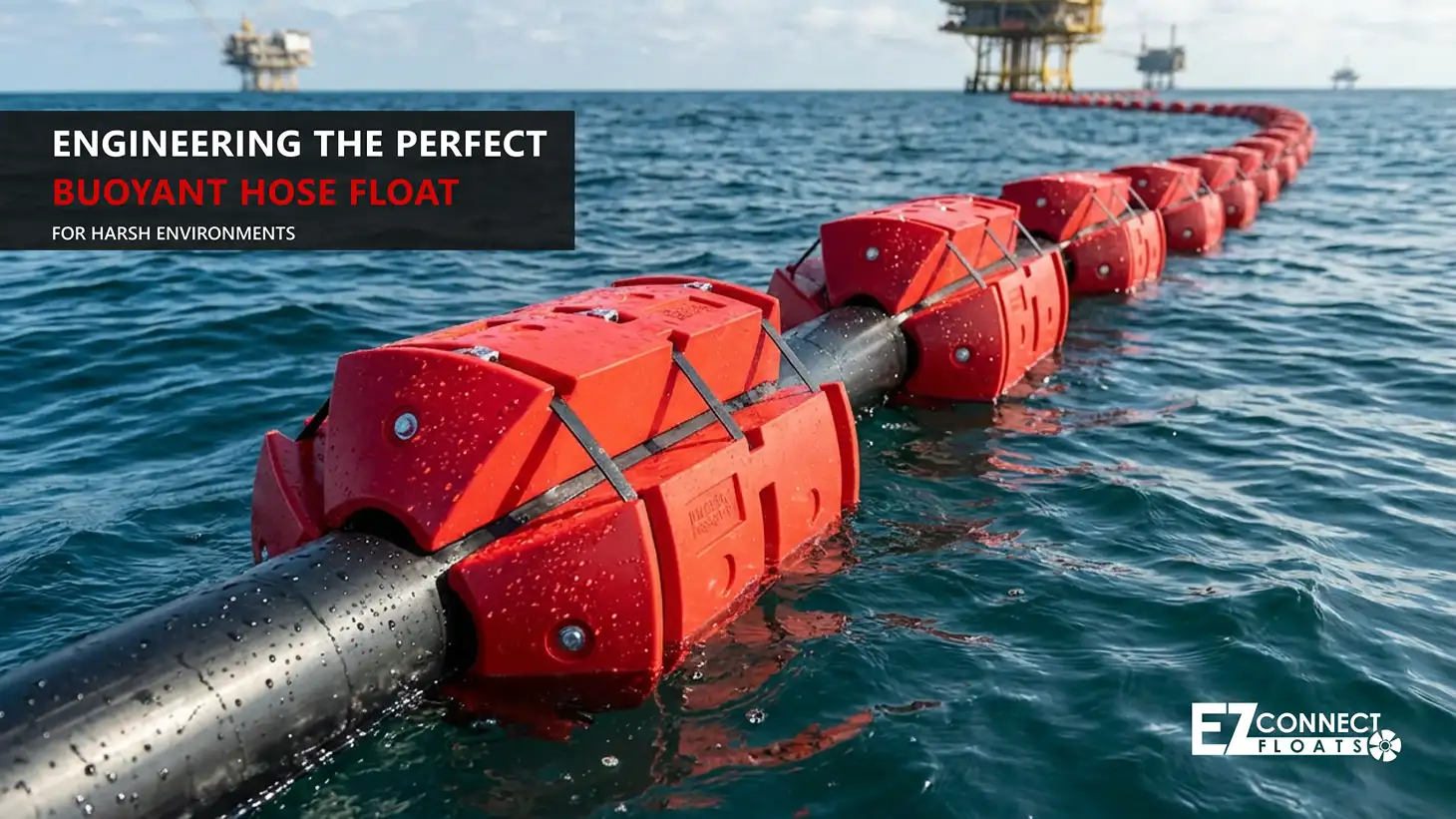
The integrity of the pipeline plays the most crucial role in marine construction, dredging, and offshore energy sectors. Like any other equipment – excavators, dredgers, cutters, etc., pipelines also drive the success of any project. A reliable pipeline always depends on the quality and type of buoyant hose floats used along the pipeline. These dredging pipe floats, though they don’t always appear on the front line, could be a crucial factor in a successful project.
While reliable, steady floats are always critical to successful projects, their failures can lead to immediate and costly consequences. Operations can be jeopardized if these buoyant hose floats scrape against the rough sea surface, if connectors fail under stress or extreme twisting, or if their buoyancy degrades. In an industry where downtime can cost upwards of $187,000 per hour, stakeholders cannot afford pipeline failures.
To ensure these floats don’t give up on their buoyancy or break down and survive decades, one must look beyond their outer shells. One should examine their engineering in depth and understand the physics of how and why they fail. In this article, we will explore how EZ Connect Floats has re-engineered the physics of buoyant hose floats to withstand the harshest environments and last for decades.
- The Physics of Failure: What Floats Always Fight With
- The Polyethylene Advantage by EZ Connect Floats
- The ‘One-Size-Fits-All’ Revolution by EZ Connect Floats
- The Modular Geometry
- Redefining Fastening Mechanism and Materials
- Rapid Installation of EZ Connect Floats:
- Operational Resilience: Maintenance and Sustainability
- Future-Proofing Your Marine Operations
The Physics of Failure: What Floats Always Fight With
The marine environment could be extremely harsh at times. Dredging pipes floating in marine water face a triple threat: mechanical, chemical, and environmental stresses that can readily expose the weak engineering behind them.
-
Hydrodynamic Drag and Friction:
Submerged or sagging hoses possess significant risks. Once they come into contact with water, they experience significant drag. If they sink to the seabed, they come into contact with abrasive sands and rocks that can easily strip the outer covering from the hoses.
Wear in dredging operations is related to soil particle movement and the impact angle. If buoyant hose floats aren’t properly buoyed, they bend and start sagging, resulting in a ‘corner wear’ that shortens the life of the discharge hoses. Furthermore, a submerged dragging line increases the resistance to the tow vehicle, leading to higher fuel consumption. The right industrial hose flotation is not only about keeping the hose visibly afloat, but also about keeping it neutrally buoyant, reducing stress on the couplings.
-
UV and Salinity Exposure:
Ultraviolet (UV) radiation can degrade generic plastic faster than you might expect. The C-H (carbon-hydrogen) bond in these plastics is sensitive to wavelengths between 290 and 400nm. Solar radiation can readily trigger photodegradation and break molecular chains. Excessive or continuous UV exposure can render polymer surfaces powdery and brittle.
Moreover, saltwater’s corrosivity can damage the galvanized hardware used to assemble the industrial hose flotation line. Strong sunlight or UV exposure in seawater can result in catastrophic failure.
-
Impact Energy:
Dredging sites are meant to be rough. Service boats move around these sites, debris floats in the water, and high-pressure slurries surge through the hoses. This creates an intense kinetic impact on the dredging pipe floats. If the float material is too hard, this kinetic impact can easily break the floats. If the float material is too soft, impact can cause the floats to bend, deform in size and shape, and ultimately lose buoyancy.
The Polyethylene Advantage by EZ Connect Floats
To address these environmental and industrial hose flotation threats, EZ Connect Floats introduced ultra-durable buoyant hose floats made of high-density polyethylene (HDPE). Polyethylene’s density is lower than water’s, making it naturally buoyant. Also, their high molecular resilience makes them ideal materials for floats.
-
Elasticity vs. Rigidity:
In addition to high molecular resilience, polyethylene has a unique elastic property that enables it to absorb shock. In the event of a collision, this material flexes rather than deforms. The high-density polyethylene (HDPE) used by EZ Connect Floats provides high rigidity and strong UV resistance, ensuring a long lifetime for the dredging pipe floats.
-
Chemical Inertness:
High-density polyethylene is highly corrosion-resistant to saline water and to chemicals present in industrial runoffs or tailings around mines. Metal floats in such environments require high maintenance, such as painting and installing sacrificial anodes, to prevent rust. Standard plastic floats also fail to sustain in such environments. On the other hand, the chemical inertness and high durability of EZ Connect Floats’ polyethylene floats make them a great choice for such harsh environments.
-
Thermal Stability:
Whether it’s the freezing water of the North Sea or the blazing heat of the Persian Gulf, the HDPE buoyant hose floats stand out for their excellent thermal stability. They neither get brittle at freezing temperatures nor are they softened by excessive heat. Their ability to withstand both high and low temperatures makes them the ideal choice for operations across all latitudes.
This polyethylene advantage sets EZ Connect Floats ahead in challenging marine and industrial conditions. HDPE floats deliver long-term performance with minimal maintenance by combining natural buoyancy, impact-absorbing elasticity, chemical inertness, and high thermal stability. With this modular, material-driven design, EZ Connect Floats engineered traditional floats to deliver reliable flotation, extended service life, and optimal performance in harsh, challenging environmental conditions.
The ‘One-Size-Fits-All’ Revolution by EZ Connect Floats
Sizing has always been a common issue with buoyant hose floats. Projects using 10-inch hoses require 10-inch floats. But if the next project requires a 12-inch or another hose size, the previously purchased floats become unusable. This rigidity in design and sizing causes warehouse bloat and increased operational cost.
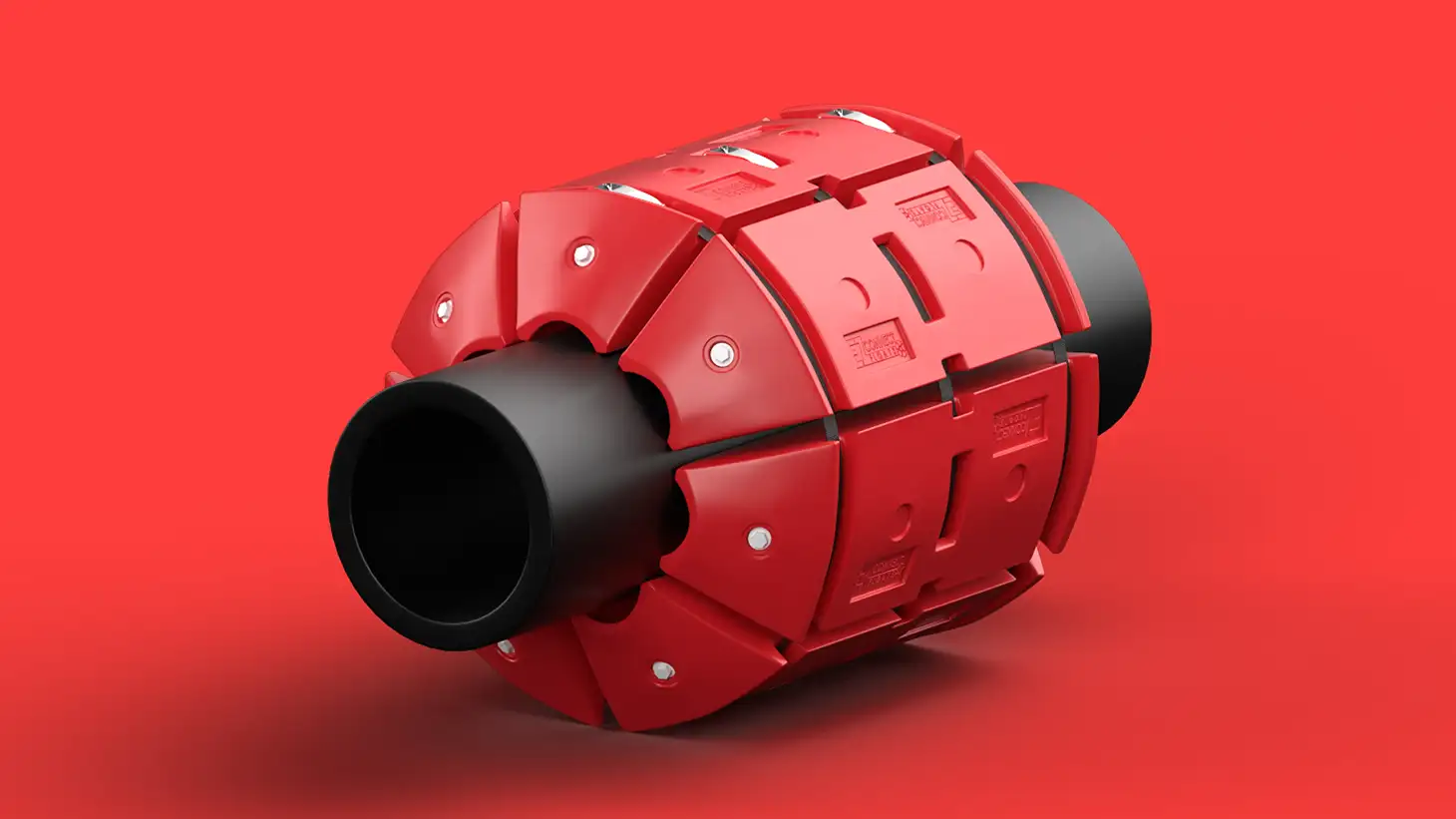
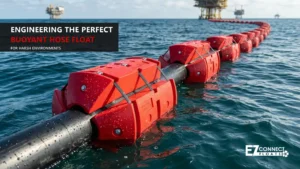
EZ Connect Floats changed this industrial hose flotation challenge by introducing their patented modular design that mimics the links of a watch band. Their floats can be added or removed to increase or decrease the float size, creating larger or smaller float sets to fit diameters from 1 to 40 inches.
Their hose, pipe, and cable floats serve as individual buoyancy blocks that can be connected as required. The modular design of the float allows crew members to add or remove sections based on hose size and weight or site conditions. This offers greater flexibility than traditional one-piece floats, which don’t allow scaling buoyancy up for heavier lines or down for lighter applications.
The Modular Geometry
While all the dredging pipe floats follow a static molded hole, buoyant hose floats from EZ Connect Floats function as individual buoyancy blocks that can be easily strapped together. These floats follow an ‘add-or-subtract’ engineering that allows for:
-
Universal Fit:
EZ Connect Floats introduced floats that are designed for a wide range of applications. The same float module can support anything from a 1-inch cable to a 40-inch discharge pipe. To work with discharge pipes of larger diameter, one needs to simply add more float modules to the chain without changing the float type. This modularity of the floats is highly effective for subsea cable projects, where cable diameter varies.
-
Precise Buoyancy Control:
Conditions are never constant in marine or dredging operations. Some conditions may require the hose to ride higher in the water or to reduce the drag force, and other operations may demand better stability. With EZ Connect Floats, buoyancy can be adjusted one float at a time by adding or removing dredging pipe floats from the pipeline. This level of precise tuning is not possible with traditional clamshell floats.
-
Inventory Efficiency:
With traditional float systems, contractors must stock multiple industrial hose flotation sizes to match different pipe and hose sizes. EZ Connect Floats addresses this with their one-size-fits-all modular floats. The same floats can be used across a wide range of hose, pipe, and cable sizes by simply adding or removing them. This reduces warehouse space requirements, inventory levels, and transportation costs, making project planning easier and more efficient.
Redefining Fastening Mechanism and Materials
A float system will last only if the hardware that holds it together is reliable. The float fastening system undergoes significant movement during operation. From the massive dynamic pull of waves and currents to constant exposure to UV rays and saline environments, the fastening hardware endures significant wear. Their failure can cause the floats to loosen and, ultimately, the hoses and pipelines to sink.
Most conventional float manufacturers still rely on galvanized bolts or mild steel clamps to secure their float systems. This makes the system prone to corrosion and rusting. If not replaced on time, the floats would detach from the hoses and pipelines, causing them to sink or get dragged along the seabed, or put stress on couplings and equipment.
EZ Connect Floats has redefined the float fastening mechanism by introducing stainless steel ratchets and high-quality nylon fasteners.
-
Stainless Steel Rachets:
Stainless steel is highly durable and provides a strong, non-slip tightening force. It resists corrosion and keeps the buoyant hose floats system firmly in place even under high vibration, strong waves, and continuous movement. This ensures high reliability by keeping the floats locked in their position throughout the operation.
-
Nylon Straps:
Nylon is a very strong and durable fiber. It performs extremely well in wet conditions and does not rot easily or develop mildew, even in harsh marine environments. Even constant UV exposure or strong sunlight does not affect nylon’s tensile strength. This makes nylon ideal to be used as the fastening material for floats.
Rapid Installation of EZ Connect Floats:
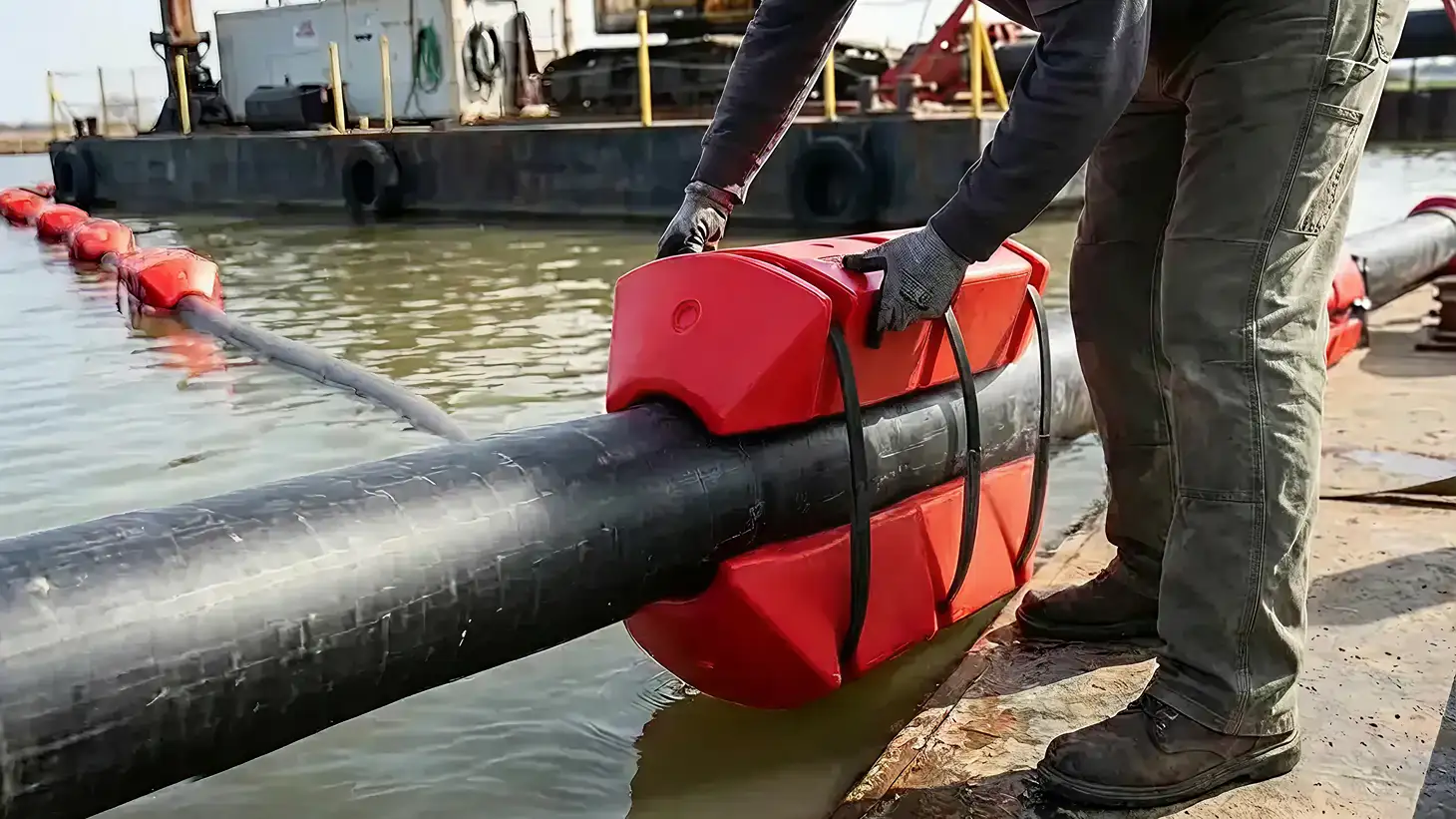
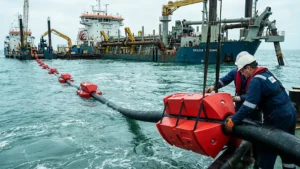
While installing other dredging pipe floats requires power tools and heavy machinery, EZ Connect Floats’ floats enable quick installation. Even a single crew member can install these buoyant hose floats within a couple of minutes by following a few simple steps.
Installing Cable, Pipe, and Hose Floats from EZ Connect Floats:
- Ensure a clear working area
- Place the first half of the float flat on the ground
- Position the pipe into the groove across the float
- Place the second float over the pipe, and the first float
- Place other floats side by side if more than two floats are required
- Slide the nylon strap through the designated slots in the floats and tighten the strap
- Tighten the strap till the floats sit securely in place without any movement
- Lock the stainless-steel ratchet to secure the float assembly
- Secure any loose ends of the strap with zip ties to avoid hanging
- Repeat the process till all the floats are secured along the line
Operational Resilience: Maintenance and Sustainability
Damage is inevitable on any job site. A sharp piece of an object or a moderate collision could be enough to puncture the dredging pipe floats. Even extreme weather and constant sunlight exposure can break the rigidity of the float materials and lead to buoyancy loss.
With traditional one-piece floats, a single puncture or collision can render the entire float unit unusable. One must unbolt the flange, remove the damaged float, slide it off, and install a new operational float to restore the pipeline. This restoration process using the traditional float system could cause significant downtime and increase operational costs.
The EZ Connect Floats Difference:
EZ Connect Floats engineered the entire maintenance system around the modular, segmented design of their floats. If any damage, puncture, or collision occurs, these floats can be repaired immediately. The repair process is as simple as installing the floats:
- Unstrap the damaged float
- Swap out the damaged float without disturbing the working floats
- Replace the damaged float with a new one
- Re-strap the new float and secure the line
Their buoyant hose floats are hollow by design, so even if one float is damaged, the others maintain buoyancy, keeping the line operational. These floats eliminate the need for foam fillings, which typically break down and degrade into microplastics, harming the environment. However, for extreme deep-water applications, foam filling remains an available option for redundant buoyancy.
Future-Proofing Your Marine Operations
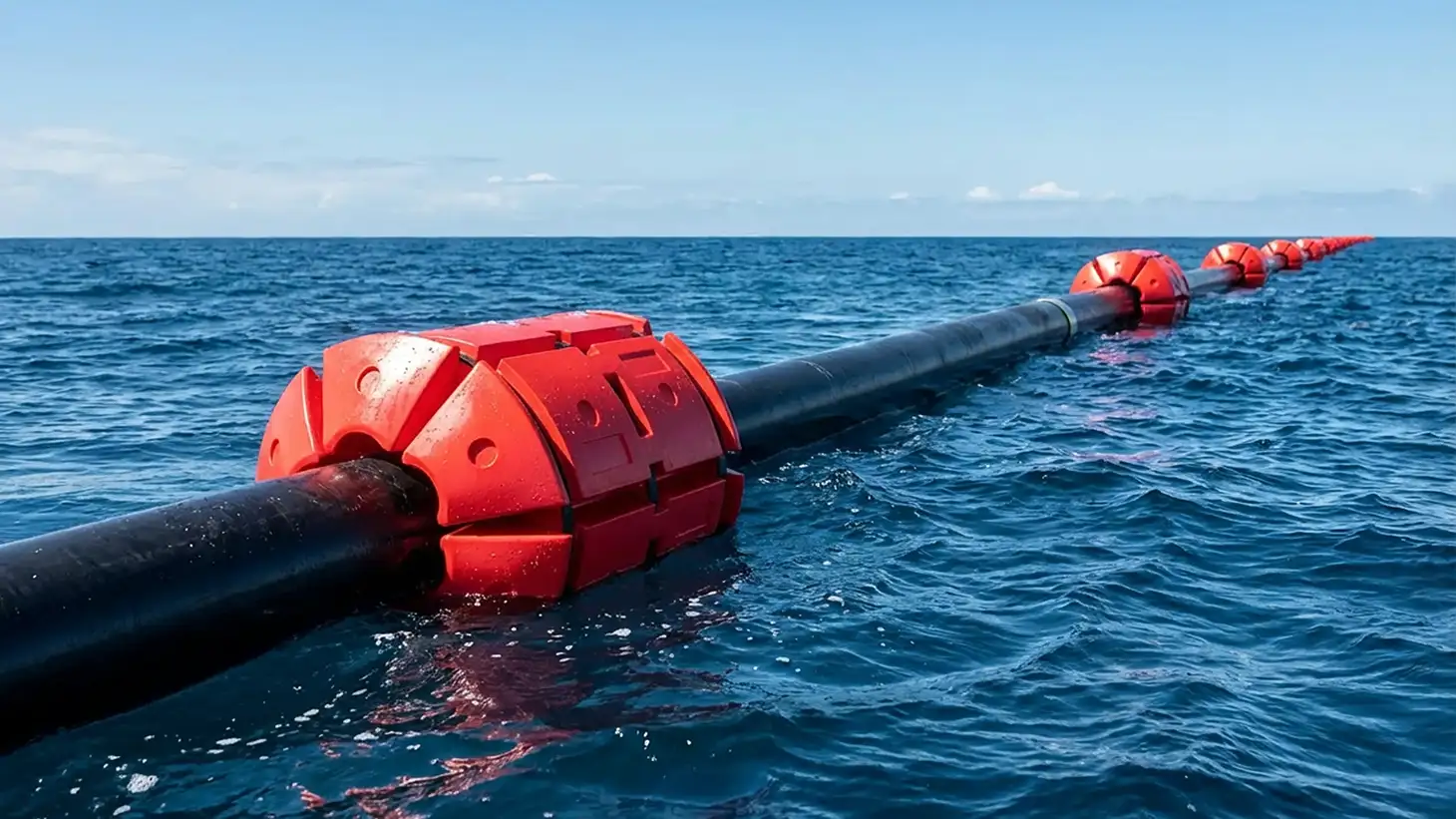
Engineering is not only about making things work. It’s about making things simpler, safer, more efficient, and capable of running indefinitely. EZ Connect Floats engineered the way buoyant hose floats were designed and used across industries. By combining the chemical superiority of polyethylene with the smart ‘one-size-fits-all’ design, modular geometry of the floats, and modular strap system, EZ Connect Floats delivered a flotation system that works in harsh environments, not against them.
Contact EZ Connect Floats today to upgrade your flotation system and switch to industrial hose flotation that withstands even the harshest environments.
Step-by-Step Guide to Cable Float Installation for Submersible Cables
Submersible cables rarely fail due to electrical faults; rather, they mostly fail due to mechanical issues. Ask any marine engineers about this, and they will
Engineering the Perfect Buoyant Hose Float for Harsh Environments
The integrity of the pipeline plays the most crucial role in marine construction, dredging, and offshore energy sectors. Like any other equipment – excavators, dredgers,
The Role of Industrial Hose Supply in Workplace Safety and Efficiency
In high-stakes industries such as oil and gas, mining, manufacturing, dredging, and defense, industrial hoses serve as vital connectors in daily operations. Whether transferring hazardous