
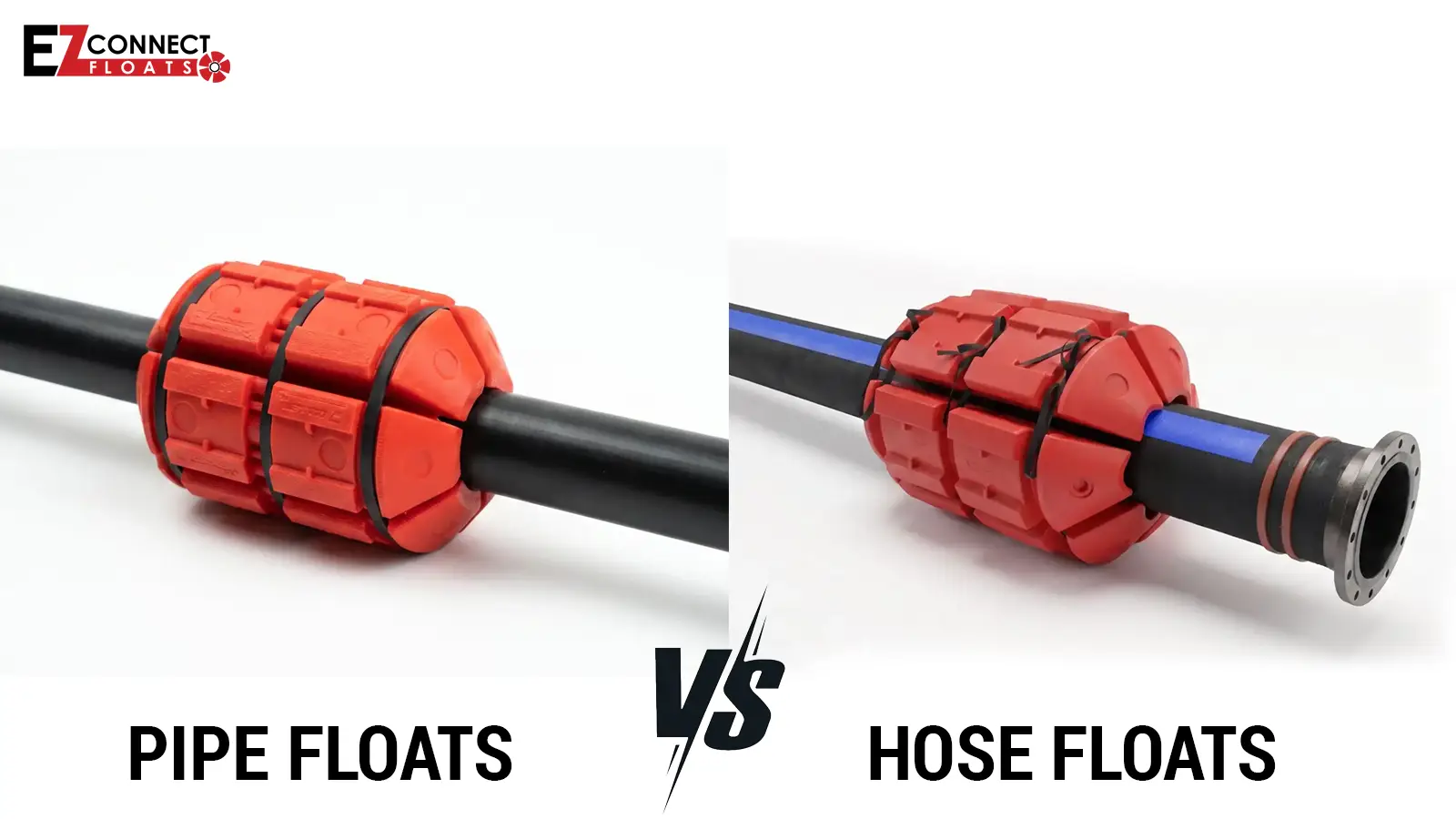
“Pipe float” and “hose float” describe the supported line more than two necessarily different float bodies. Rigid or semi-rigid pipe carries bending, joint, and thermal loads differently from flexible hose, which bends, pulses, twists, and articulates. EZ Connect uses the same patented modular float-unit concept for both, but the configured set, spacing, straps, and engineering must fit the actual line.
- Quick Answer
- The Fundamental Difference: Rigid vs. Flexible Load
- How This Difference Affects Float Spacing
- How This Difference Affects Attachment Hardware
- Weight Considerations: Which Typically Weighs More?
- Comparison Table
- When the Same Project Needs Both
- Terminology Confusion in the Field
- How Manufacturers Typically Differentiate the Two Product Lines
- What to Send EZ Connect Floats for a Project Review
- Frequently Asked Questions
- Related EZ Connect Resources
- Get a Project-Specific Float Configuration
Quick Answer
Choose a pipe-float layout for rigid or semi-rigid pipeline and a hose-float layout for flexible hose. Pipe review emphasizes wall and contents weight, joints, allowable span, deflection, and long-run stability. Hose review adds minimum bend radius, sidewall load, pressure, coupling support, pulsation, abrasion, torsion, and movement. Neither line type always requires closer spacing; calculate each section.
EZ Connect’s patented system uses individual polyethylene float units assembled around pipe, hose, cable, or umbilical with nylon straps and stainless-steel ratchets. Units can be added, removed, replaced, and reconfigured, but every new layout must be checked for fit, rated buoyancy, spacing, stability, hardware, line limits, and operating conditions.
The Fundamental Difference: Rigid vs. Flexible Load
Pipe is rigid along its length—a section of HDPE or steel dredge pipe doesn’t bend meaningfully under normal operating conditions, and it moves as a series of connected but individually stiff segments joined at fittings. Hose is flexible along its entire length, bending continuously in response to current, wave action, or simply the natural curve of its deployment path. This single distinction—rigid segments versus continuous flex—drives most of the practical differences between how pipe floats and hose floats need to be engineered and deployed.
How This Difference Affects Float Spacing
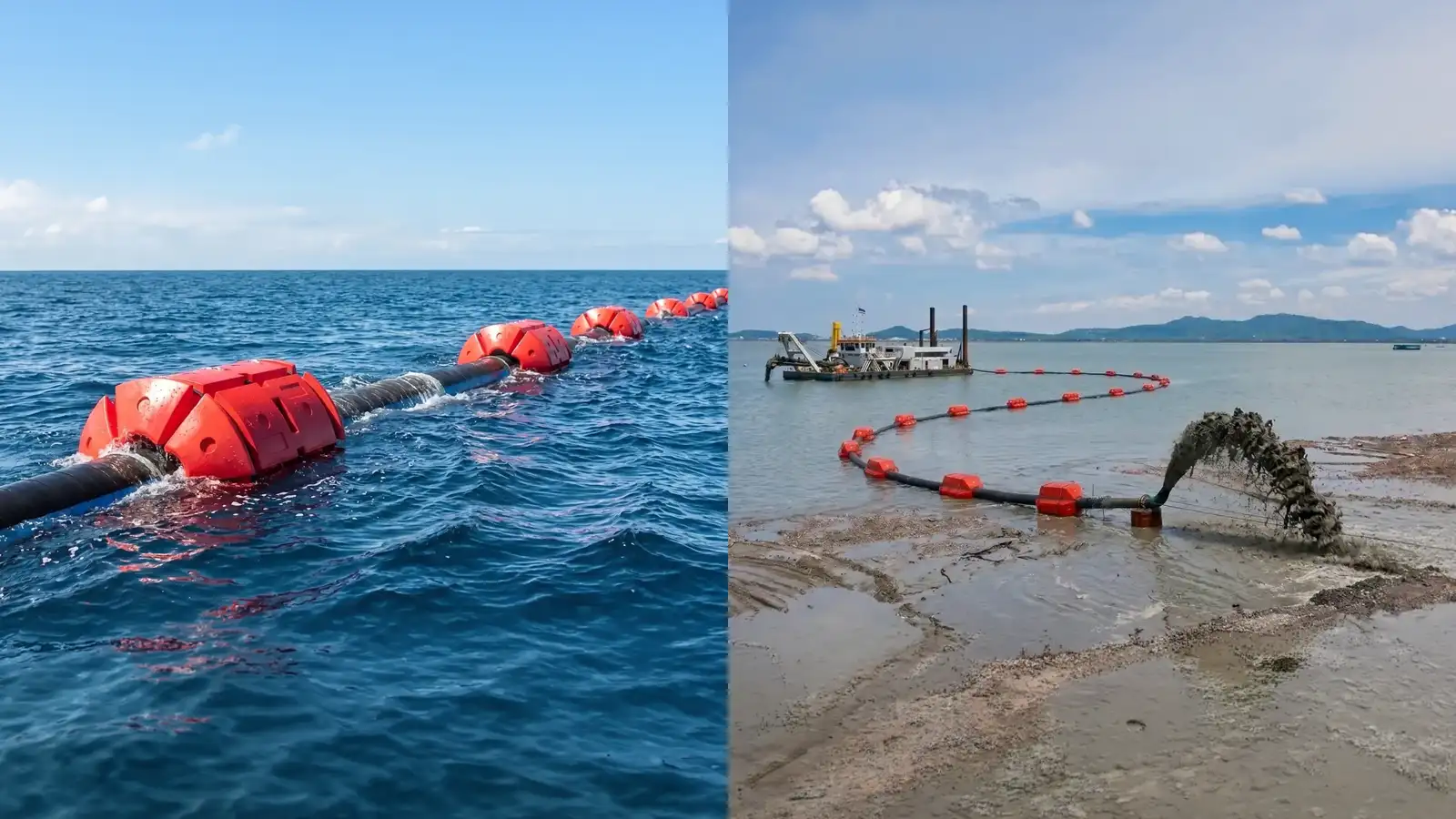
Spacing follows the submerged load, float rating, line stiffness, allowable sag, pipe deflection, hose bend radius, couplings, contents, dynamic movement, and manufacturer support limits. Flexible hose does not always need closer spacing than pipe. A heavy pipe section or concentrated component may require closer support than a light hose, while overly close hose supports can make the string too stiff to articulate.
How This Difference Affects Attachment Hardware
The attachment must fit the configured EZ Connect set and stay within the line manufacturer’s limits. Rigid pipe still moves through bending, thermal expansion, waves, towing, and joints; hose needs room to flex without crushing, pinching, rubbing, or slipping. Use the approved strap route and tension procedure, and keep ratchets and straps clear of joints, sharp edges, reinforcement, and prohibited support zones.
Weight Considerations: Which Typically Weighs More?
This depends entirely on the specific pipe and hose being compared—there’s no universal rule that pipe always weighs more than hose or vice versa. HDPE dredge pipe filled with dense slurry can present a very heavy linear load; a lightweight water-transfer hose can be relatively light even when full. The practical guidance is to calculate actual loaded weight for the specific pipe or hose in question (using the same core methodology covered in our sizing guide, adapted to the specific product) rather than assuming one category is categorically heavier than the other.
Comparison Table
| Selection factor | Rigid or semi-rigid pipe | Flexible hose |
|---|---|---|
| Line behavior | Holds a defined shape but bends over long spans and at joints | Bends, pulses, twists, and articulates |
| Governing inputs | Wall, contents, fittings, allowable span, deflection, joints, thermal movement | Carcass, contents, pressure, couplings, bend radius, sidewall load, tension, movement |
| Layout focus | Distributed support, concentrated joints/fittings, long-run stability, shore transitions | Sag and articulation, coupling support, abrasion, pulsation, torsion, moving equipment |
| EZ Connect product | Modular units configured into an approved set | The same modular concept, configured and spaced for the hose application |
When the Same Project Needs Both
Many projects genuinely use both pipe and hose in different sections—a dredge project might run rigid HDPE pipe for the bulk of a long discharge run, transitioning to flexible hose near the discharge point where more maneuverability is needed, or a marine construction project might combine pipe for a fixed water supply run with hose for the flexible concrete placement line. Recognizing that a project needs both float types, rather than trying to standardize on one for the entire job, is often the correct answer rather than a compromise.
Terminology Confusion in the Field
Part of why pipe floats and hose floats get conflated in casual use is that both products often look broadly similar from a distance—buoyant modules attached at intervals along a length of piping material. The confusion rarely causes a problem when both the pipe/hose and the float are correctly matched by someone who understands the distinction, but it becomes a real issue when a purchasing decision gets made purely on visual similarity or generic product category without confirming the specific load type. Being explicit about which category a given application actually falls into—asking directly whether the product being floated is rigid, segmented pipe or continuously-flexing hose—is a simple question that avoids most of the practical confusion this comparison addresses.
How Manufacturers Typically Differentiate the Two Product Lines
Some manufacturers sell diameter-specific pipe and hose shells. EZ Connect’s product pages use the same configurable modular wedge system for pipe and hose applications. That product commonality can simplify inventory, shipping, field replacement, and reuse, but it does not make the engineering identical. Confirm the approved unit count, fit, straps, buoyancy, spacing, stability, and operating layout for every line.
What to Send EZ Connect Floats for a Project Review
- Pipe or hose outside diameter, material or construction, wall or SDR, length, empty/full weight, pressure or vacuum, and manufacturer support limits
- Contents, density, retained or flooded cases, and whether the line drains after shutdown
- Fittings, couplings, flanges, valves, reducers, manifolds, wear sleeves, transitions, and concentrated loads
- Target freeboard, allowable sag, pipe deflection, hose bend radius, tension, sidewall load, articulation, and movement
- Water density, current, waves, wind, tide, wake, towing, temperature, chemical exposure, marine growth, installation, reuse, spares, quantity, schedule, and delivery location
Frequently Asked Questions
Is an EZ Connect pipe float physically different from an EZ Connect hose float?
The core modular float unit is the same concept. The configured set, spacing, strap arrangement, and application engineering change with the supported line.
Does flexible hose always need closer float spacing than pipe?
No. Calculate spacing from load, stiffness, allowable sag, bend radius, couplings, contents, dynamic movement, line limits, and float rating.
Can an EZ Connect hose configuration be reused on rigid pipe?
Potentially, but the set and spacing must be recalculated for the new diameter, submerged load, fittings, freeboard, environment, and pipe structural limits.
Can a project use both pipe and hose flotation?
Yes. Many pumping systems use hose near moving equipment and rigid HDPE over a long run. Support the transition assembly and calculate each section separately.
Which costs more: pipe floats or hose floats?
There is no universal answer. Compare configured quantity, hardware, shipping, installation, reuse, spares, maintenance, and replacement for the actual project.
Related EZ Connect Resources
Get a Project-Specific Float Configuration
Send EZ Connect Floats the supported line, dimensions, operating and retained loads, concentrated components, required freeboard, environment, line limits, route, quantity, and schedule. The team can review the modular set, spacing approach, straps and hardware, spare units, and quote for the actual application.
Request a Quote or call (858) 859-2385 to discuss the project.
Pipe Float vs. Hose Float: What’s the Real Difference?
This guide explains how dredge pipe floats work, how to size and space them, how the main float types compare, and where clamp-on HDPE dredge pipe floats fit — so a floating dredge pipeline stays on the surface through the whole job.
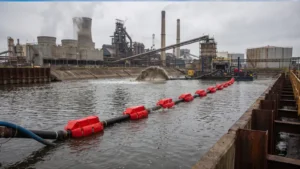
Floats for Wastewater Bypass and Temporary Pumping Systems
This guide explains how dredge pipe floats work, how to size and space them, how the main float types compare, and where clamp-on HDPE dredge pipe floats fit — so a floating dredge pipeline stays on the surface through the whole job.
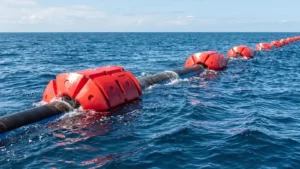
Floats for Marine Construction: Complete Buyer’s Guide
This guide explains how dredge pipe floats work, how to size and space them, how the main float types compare, and where clamp-on HDPE dredge pipe floats fit — so a floating dredge pipeline stays on the surface through the whole job.