
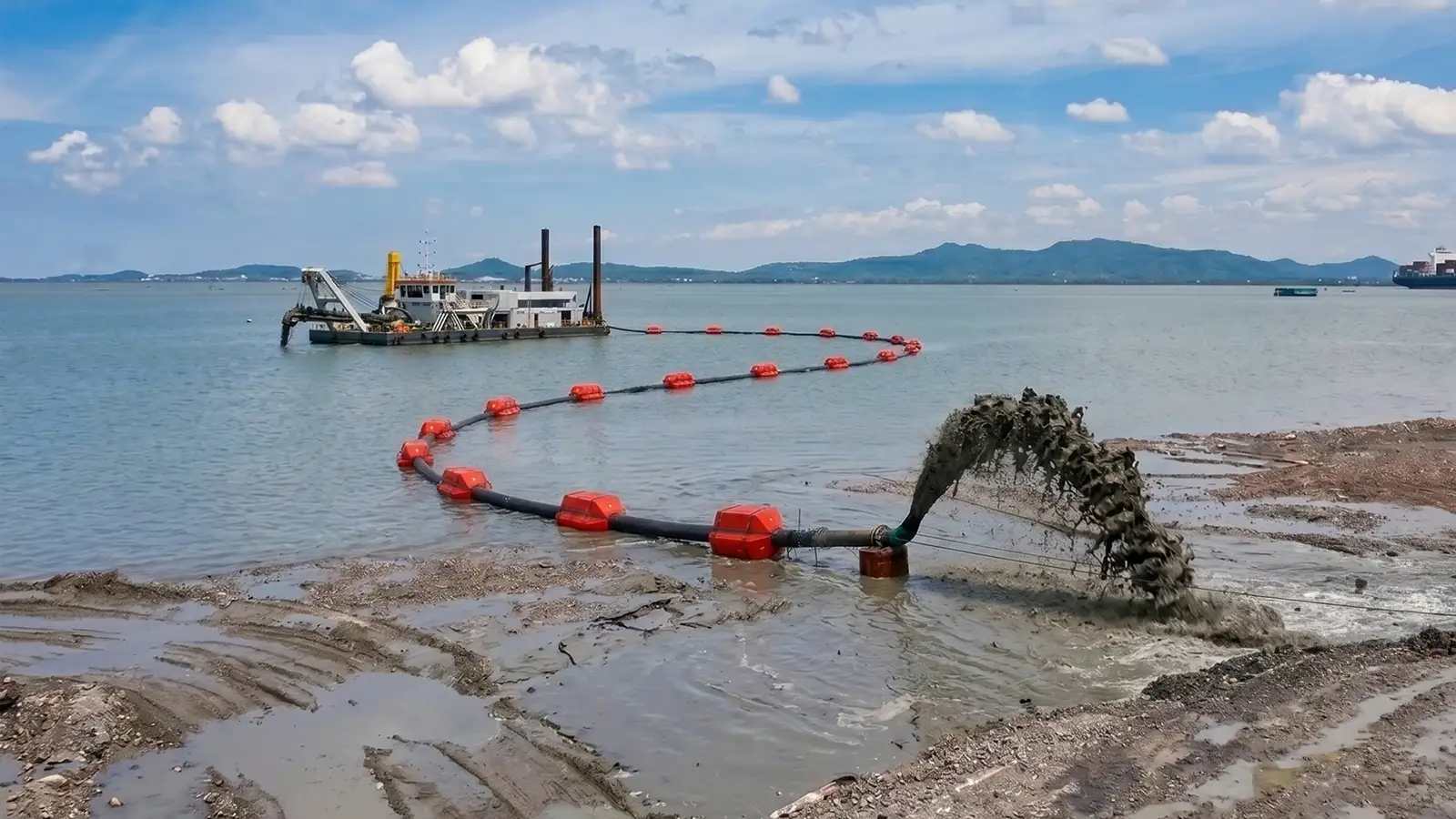
Mining slurry flotation must be based on the maximum credible line load and facility design basis. Tailings and process slurries can change density with ore, plant conditions, water balance, shutdown, settling, flushing, and upset events. The layout should also account for retained material, abrasive service, fittings, chemical exposure, pond conditions, pipe limits, and the mine’s engineering and operational controls.
- Quick Answer
- Why Mining Slurry Density Requires Careful Review
- Common Mining Applications for Floats
- Sizing for Variable Solids Concentration
- Chemical Compatibility Considerations
- Coordination With Facility Engineering Requirements
- Wear Considerations Specific to Abrasive Mining Slurry
- Planning Float Requirements Across a Facility's Multiple Slurry Lines
- Seasonal and Production-Cycle Variability at Mining Operations
- What to Send EZ Connect Floats for a Project Review
- Frequently Asked Questions
- Related EZ Connect Resources
- Get a Project-Specific Float Configuration
Quick Answer
Calculate the actual pipe or hose and contents for every required condition; subtract the buoyant effect of the line’s displacement; add concentrated loads; then select configured-set buoyancy and spacing on the same published submergence basis. EZ Connect modular units can be reconfigured across mine lines, but each new duty needs a fresh fit, load, hardware, and environment review.
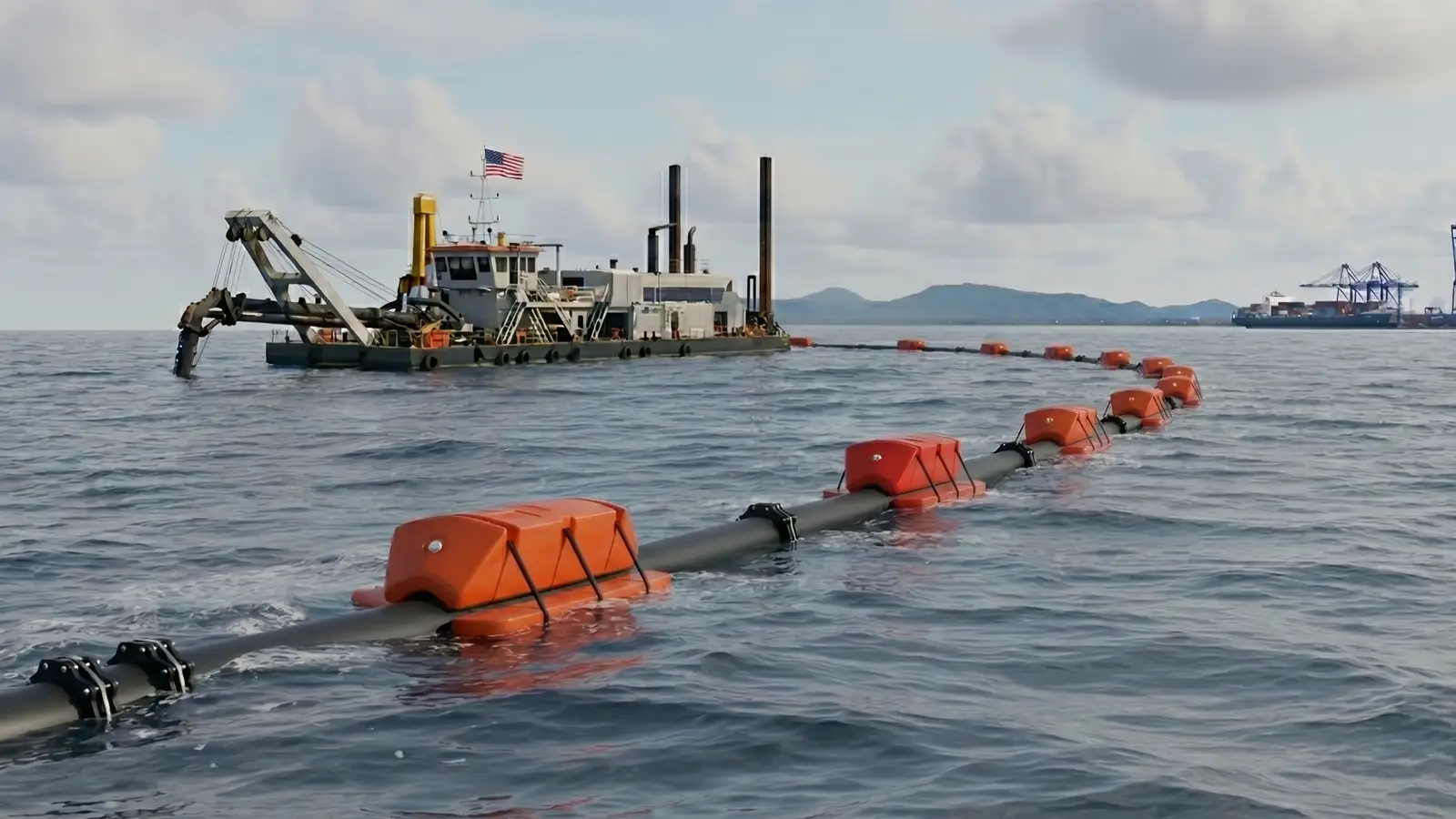
EZ Connect’s patented system uses individual polyethylene float units assembled around pipe, hose, cable, or umbilical with nylon straps and stainless-steel ratchets. Units can be added, removed, replaced, and reconfigured, but every new layout must be checked for fit, rated buoyancy, spacing, stability, hardware, line limits, and operating conditions.
Why Mining Slurry Density Requires Careful Review
Mining lines can carry highly variable mixtures, but no application should be ranked by an unsupported “heaviest” claim. Use measured or owner-approved mixture density, solids concentration, retained and settled material, flushing, flooded, and upset cases. The governing case may change across production cycles and shutdown conditions.
Common Mining Applications for Floats
- Tailings transport lines—supporting pipe carrying tailings slurry from processing facilities to tailings storage facilities, often the heaviest and most sustained-load application in mining slurry transport
- Process water return lines—supporting pipe or hose returning water from tailings facilities or settling ponds back to the processing circuit, typically lighter loaded weight than tailings transport but still requiring accurate sizing
- Concentrate transport—supporting pipe carrying higher-value, often higher-density concentrate slurry over shorter distances within a facility
- Temporary dewatering and pond management lines—supporting pipe or hose used for tailings pond dewatering and water management, an application that frequently overlaps with the amphibious equipment access considerations covered in tailings pond maintenance guides
Sizing for Variable Solids Concentration
Size and verify against every maximum credible condition required by facility engineering—not only the average or normal operating concentration. A line may retain or settle solids after shutdown, receive a denser ore campaign, or flood during maintenance. Document the governing density, line fill, temperature, water density, fittings, target freeboard, design factor, and pipe or hose support limits.
Chemical Compatibility Considerations
The slurry normally remains inside the pipe or hose, but floats and hardware can encounter splash, leaks, washdown, process water, reagents, hydrocarbons, UV, temperature, and contaminated pond water. Provide the facility’s chemical and exposure data so polyethylene, nylon straps, stainless-steel ratchets, optional foam, and any protective materials can be reviewed for compatibility.
Coordination With Facility Engineering Requirements
Mining facilities, particularly around tailings management, frequently operate under the kind of engineering-controlled operating plans discussed in tailings facility equipment guides more broadly—float-supported pipeline planning for tailings transport should be coordinated with the facility’s engineering requirements the same way equipment access planning is, rather than treated as an independent decision made purely on hydraulic sizing grounds.
Wear Considerations Specific to Abrasive Mining Slurry
Abrasive slurry primarily wears the internal pipeline and fittings; it can affect the flotation system indirectly through leaks, changed wall thickness, rough external contact, vibration, movement, and maintenance frequency. Inspect line condition, couplings, float contact points, straps, and ratchets. Keep hardware clear of sharp wear features and prohibited support zones.
Planning Float Requirements Across a Facility’s Multiple Slurry Lines
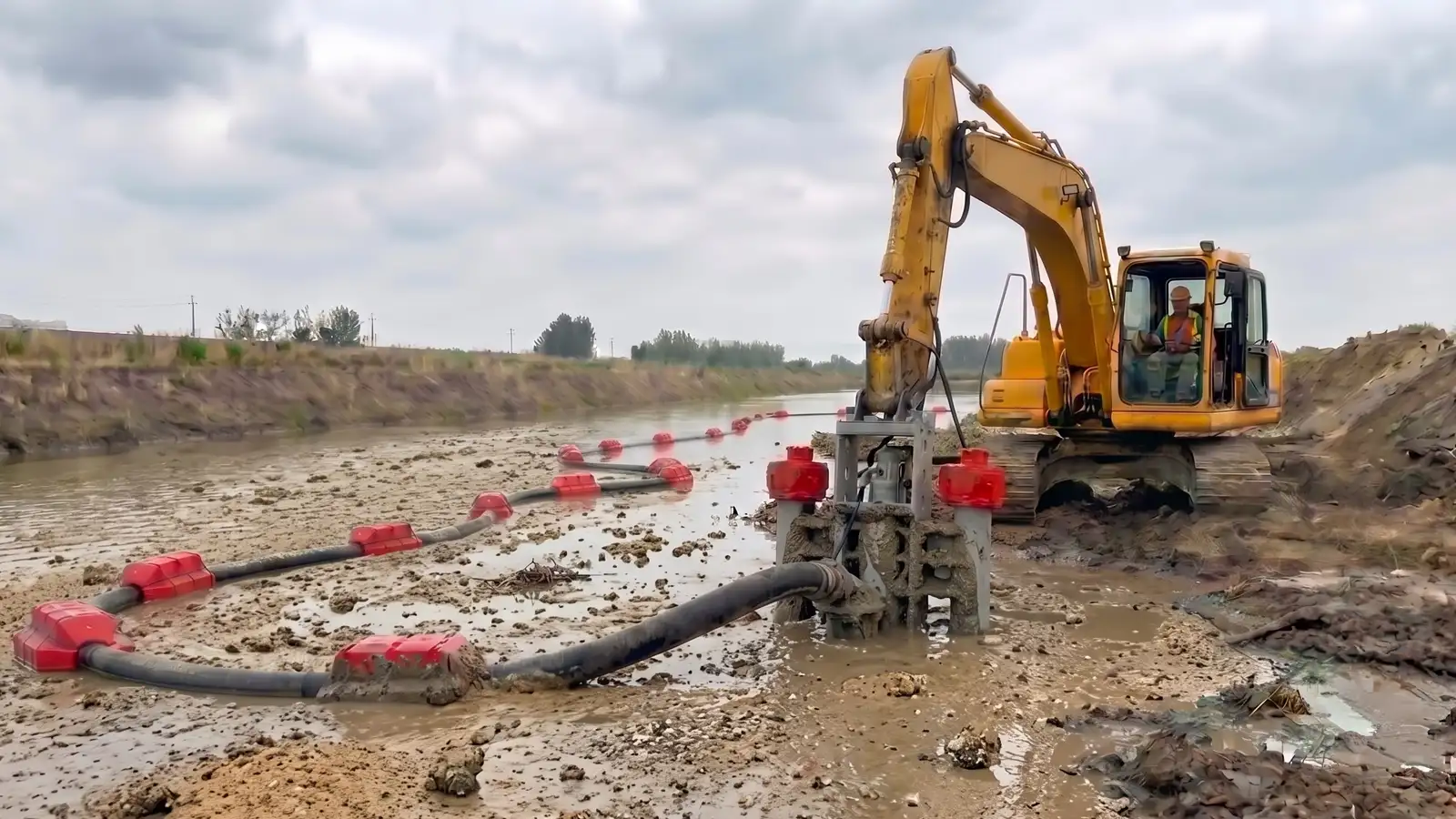
Larger mining facilities frequently run multiple distinct slurry transport lines simultaneously—tailings transport, process water return, and concentrate transport lines can all be in active service at once, each with genuinely different density and flow characteristics. Planning float inventory at the facility level, accounting for the distinct sizing requirements of each line type rather than assuming a single float specification covers all of a facility’s slurry transport needs, avoids both undersizing on the heaviest lines and unnecessary over-specification on lighter ones.
Seasonal and Production-Cycle Variability at Mining Operations
Mining operations frequently see solids concentration and total flow through slurry transport lines vary with production scheduling, ore grade changes, and sometimes seasonal factors affecting water availability for process dilution. A float sizing calculation performed against typical or average production conditions can leave a line undersupported during a higher-production period or a period when process water dilution is reduced for water conservation reasons, both plausible operational scenarios worth accounting for in the sizing margin rather than assuming production conditions will remain static throughout a line’s service life.
What to Send EZ Connect Floats for a Project Review
- Facility and service: tailings, process slurry, reclaim water, pit dewatering, pond transfer, temporary bypass, or another approved duty
- Pipe or hose outside diameter, material or construction, length, empty weight, pressure, wall or SDR, bend radius, and support limits
- Solids range, mixture density, particle characteristics, temperature, pH and chemical data, plus operating, retained, settled, flushing, flooded, and upset cases
- Fittings, valves, couplings, manifolds, booster connections, instruments, transitions, and concentrated-load locations
- Pond or water density, waves, wind, current, ice, temperature, UV, contamination exposure, route, anchoring, access, inspection, spares, reuse, facility standards, quantity, and schedule
Frequently Asked Questions
Should mining floats be sized for average slurry density?
No. Use the maximum credible operating, retained, settled, flooded, flushing, and upset conditions required by facility engineering.
Does abrasive slurry contact the floats?
Usually it remains inside the line, but leaks, splash, washdown, contaminated water, vibration, and worn pipe surfaces can expose or stress the flotation system.
Can a float fleet be moved among several mine pipelines?
Potentially. Reinspect and recalculate configuration, buoyancy, spacing, straps, chemical exposure, line limits, and concentrated loads for every new duty.
Do tailings storage facilities require site engineering approval?
Yes. Coordinate with the mine’s responsible engineer, water-management plan, operational controls, access restrictions, inspection program, and emergency procedures.
What density should be submitted for a quote?
Provide measured or approved mixture densities and solids ranges for all required cases, plus temperature, chemical data, particle characteristics, and whether material can settle or remain in the line.
Related EZ Connect Resources
Get a Project-Specific Float Configuration
Send EZ Connect Floats the supported line, dimensions, operating and retained loads, concentrated components, required freeboard, environment, line limits, route, quantity, and schedule. The team can review the modular set, spacing approach, straps and hardware, spare units, and quote for the actual application.
Request a Quote or call (858) 859-2385 to discuss the project.
Floats for Mining Slurry Transport: Application Guide
This guide explains how dredge pipe floats work, how to size and space them, how the main float types compare, and where clamp-on HDPE dredge pipe floats fit — so a floating dredge pipeline stays on the surface through the whole job.
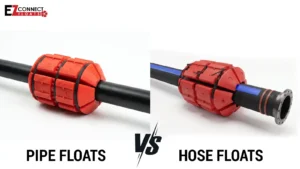
Pipe Float vs. Hose Float: What’s the Real Difference?
This guide explains how dredge pipe floats work, how to size and space them, how the main float types compare, and where clamp-on HDPE dredge pipe floats fit — so a floating dredge pipeline stays on the surface through the whole job.
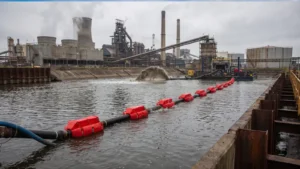
Floats for Wastewater Bypass and Temporary Pumping Systems
This guide explains how dredge pipe floats work, how to size and space them, how the main float types compare, and where clamp-on HDPE dredge pipe floats fit — so a floating dredge pipeline stays on the surface through the whole job.