
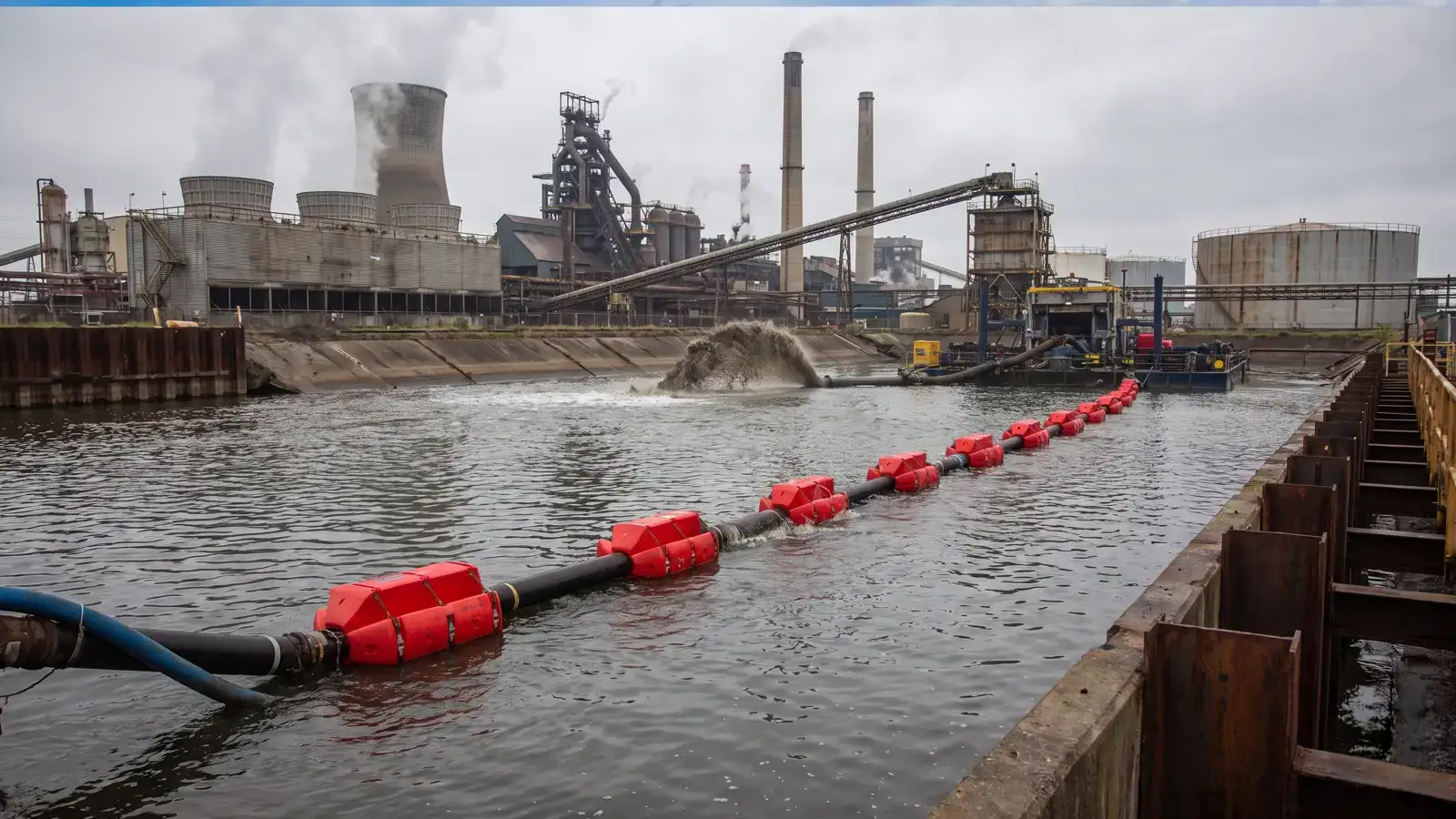
Wastewater bypass floats support pipe or hose where a temporary discharge route crosses water or must remain buoyant. They are one part of a critical bypass system that also needs pump capacity, pressure-rated hose or pipe, redundancy, monitoring, spill control, traffic protection, sanitary procedures, permits, and an emergency response plan.
- Quick Answer
- Common Wastewater Applications for Floats
- Sizing for Variable Flow Conditions
- Rapid Deployment Considerations
- Coordination With Municipal Permitting and Notification Requirements
- Water Crossing Considerations Specific to Bypass Routes
- Coordination With Ongoing Sewer Repair Work
- Redundancy Planning for Critical Bypass Systems
- What to Send EZ Connect Floats for a Project Review
- Frequently Asked Questions
- Related EZ Connect Resources
- Get a Project-Specific Float Configuration
Quick Answer
Size flotation for the maximum credible filled and retained line condition—not average flow alone. Include hose or pipe weight, actual wastewater or process-fluid density, sludge or solids, couplings, valves, fittings, target freeboard, crossings, current, weather, access, inspection duration, and the consequences of a support failure.
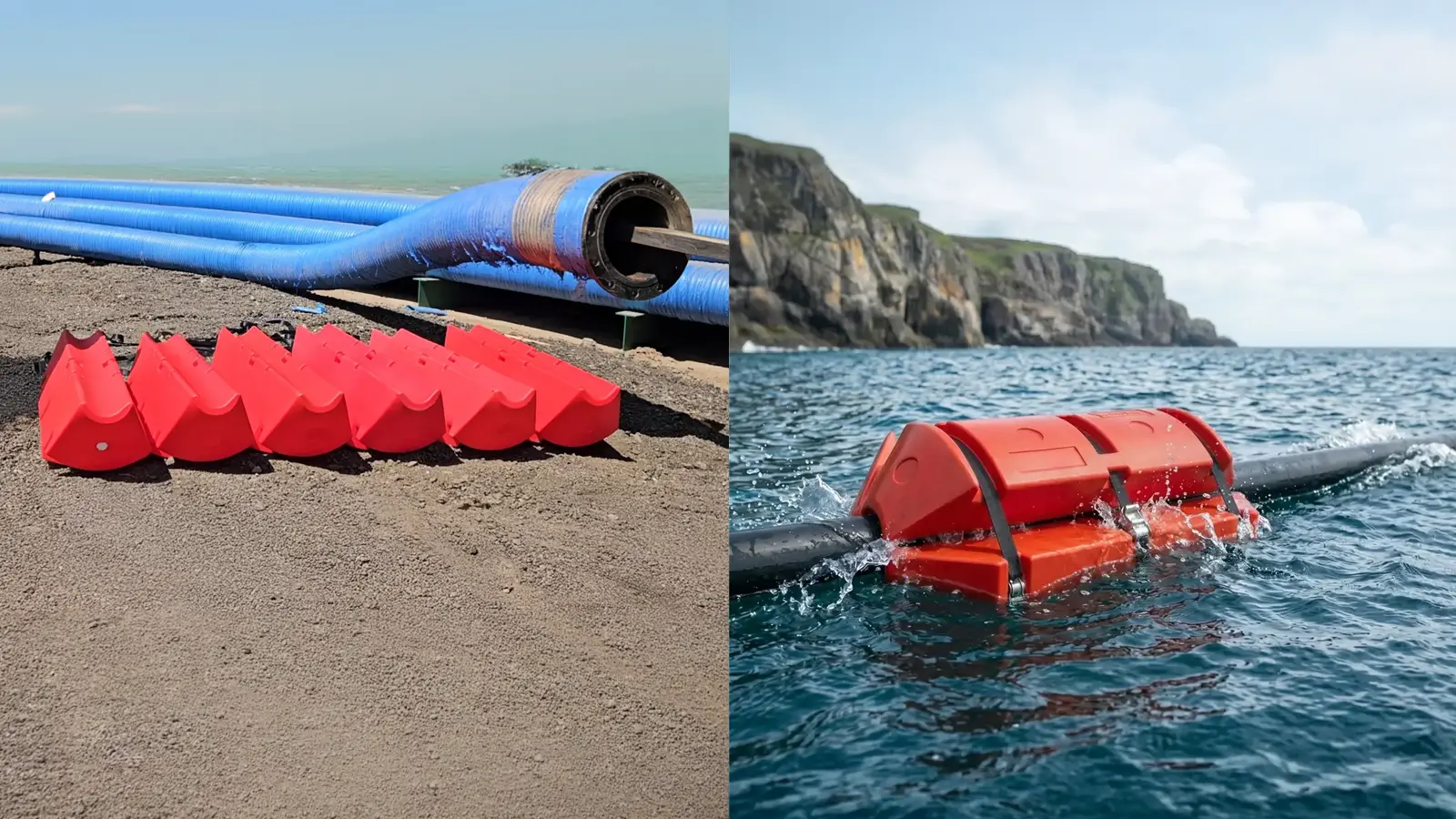
EZ Connect’s patented system uses individual polyethylene float units assembled around pipe, hose, cable, or umbilical with nylon straps and stainless-steel ratchets. Units can be added, removed, replaced, and reconfigured, but every new layout must be checked for fit, rated buoyancy, spacing, stability, hardware, line limits, and operating conditions.
Common Wastewater Applications for Floats
- Sewer bypass pumping—supporting discharge hose used to route wastewater around a section of sewer line undergoing repair or replacement, keeping the bypass line properly positioned across water crossings or wet areas along the bypass route
- Lift station bypass and temporary pumping—supporting discharge lines during lift station maintenance or emergency pumping when the permanent lift station is offline
- Stormwater management temporary lines—supporting pipe or hose used for temporary stormwater conveyance during construction or emergency response
- Treatment plant process line support—supporting temporary process water or effluent lines during plant maintenance phases when permanent piping is offline
Sizing for Variable Flow Conditions
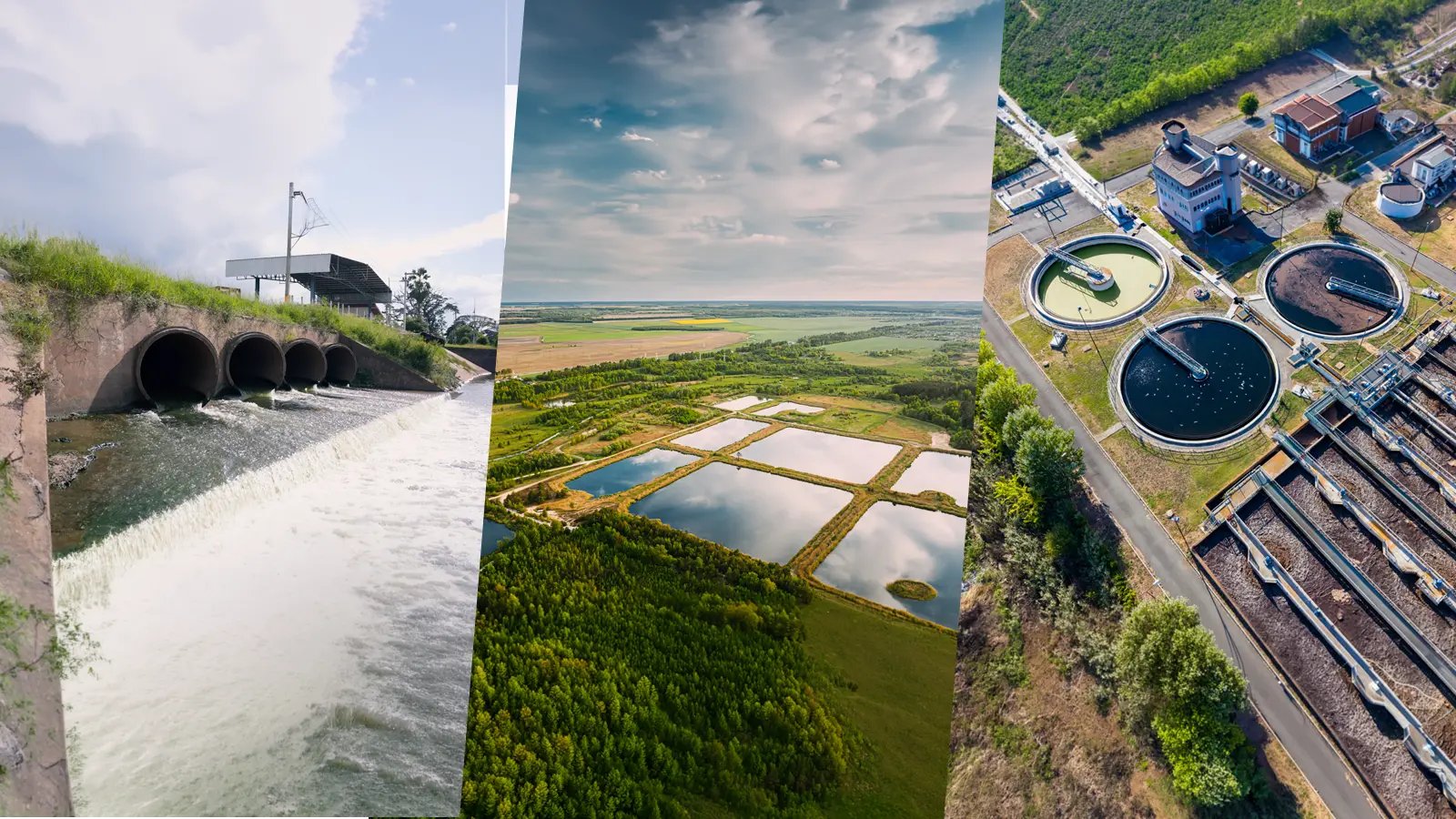
Flow determines pump and pipeline hydraulics; flotation is governed by the line’s actual filled and submerged load. Review maximum credible operating, retained, blocked, flooded, flushing, and upset conditions, including solids or sludge where applicable. Wet-weather flow may change pressure, movement, debris exposure, and system criticality, but average-versus-peak flow alone does not calculate buoyancy.
Rapid Deployment Considerations
For urgent work, maintain verified data sheets for commonly used hose, pipe, couplings, floats, straps, and pump packages, plus a rapid engineering and approval path. Do not rely on a generic wastewater specific gravity or diameter-only chart. Confirm the actual service, line fill, crossing, environment, pressure, support limits, and emergency controls before deployment.
Coordination With Municipal Permitting and Notification Requirements
Wastewater bypass operations frequently require notification to or permitting from the local regulatory authority overseeing the sewer system, particularly for bypasses of any significant duration or those crossing water bodies subject to environmental protection requirements. Float-supported bypass line planning should be coordinated with whatever notification and permitting process applies to the specific bypass operation, since permit conditions can sometimes specify requirements (spill containment, monitoring) that affect broader bypass system planning beyond the float sizing calculation itself.
Water Crossing Considerations Specific to Bypass Routes
Map every crossing and transition separately. Some dry-land sections may not need buoyant support, while streams, ditches, ponds, flood-prone areas, steep banks, bridges, public access, and vessel routes can require different supports, restraints, protection, marking, and inspection. Confirm how the line enters and leaves the water without exceeding bend, tension, abrasion, or coupling limits.
Coordination With Ongoing Sewer Repair Work
Bypass pumping exists to support an underlying sewer repair or replacement project, and float-supported bypass line planning should stay coordinated with that underlying project’s actual schedule rather than being planned as a fully independent workstream. If the sewer repair timeline extends beyond original expectations, bypass system components including floats need to remain in reliable service for the extended duration, which is worth confirming (float material durability under extended continuous exposure, attachment hardware condition) rather than assuming original short-term deployment assumptions still hold once a project timeline stretches.
Redundancy Planning for Critical Bypass Systems
Treat flotation as part of the bypass reliability review. Apply the owner- or engineer-defined design factor and operating cases, maintain spare units and hardware, inspect at a documented interval, and define response actions for loss of freeboard, slippage, damage, rising water, debris impact, or line movement. Floats do not replace backup pumps, power, monitoring, containment, or emergency storage.
What to Send EZ Connect Floats for a Project Review
- Bypass purpose, route drawing, duration, criticality, planned or emergency status, pump capacity, operating schedule, and owner requirements
- Pipe or hose outside diameter, construction, length over water, empty/full weight, pressure, bend radius, allowable support spacing, and whether the line drains
- Actual wastewater, effluent, stormwater, process-fluid, sludge, or solids data for operating, retained, blocked, flooded, flushing, and upset cases
- Couplings, valves, reducers, manifolds, meters, check valves, transition assemblies, anchors/restraints, crossings, and concentrated loads
- Water depth and density, current, flood level, wind, waves, debris, public or vessel exposure, marking, permits, spill control, monitoring, inspection, redundancy, spares, schedule, quantity, and delivery location
Frequently Asked Questions
Should wastewater bypass floats be sized for average or peak flow?
Use the maximum credible filled and retained line-load cases. Flow also affects pressure and movement, but buoyancy is calculated from line, contents, fittings, displacement, and the required design condition—not flow rate alone.
Can municipal wastewater be assumed to have the density of clean water?
No. Confirm actual service data, especially for industrial discharge, sludge, grit, high solids, retained material, or unusual temperature.
Does every bypass-route section need floats?
No. Identify water crossings and other buoyant-support locations individually, then engineer dry-land supports, ramps, bridges, bank transitions, restraints, and public protection separately.
Do floats prevent bypass pump clogging or spills?
No. They support the line. Pump selection, screening, hydraulics, monitoring, containment, redundancy, maintenance, and emergency response address clogging and spill risk.
How often should a critical bypass float system be inspected?
Use the owner-approved inspection plan, with additional checks after startup, storms, flood changes, debris impact, relocation, pressure changes, damage, slippage, or loss of freeboard.
Related EZ Connect Resources
Get a Project-Specific Float Configuration
Send EZ Connect Floats the supported line, dimensions, operating and retained loads, concentrated components, required freeboard, environment, line limits, route, quantity, and schedule. The team can review the modular set, spacing approach, straps and hardware, spare units, and quote for the actual application.
Request a Quote or call (858) 859-2385 to discuss the project.
Pipe Float vs. Hose Float: What’s the Real Difference?
This guide explains how dredge pipe floats work, how to size and space them, how the main float types compare, and where clamp-on HDPE dredge pipe floats fit — so a floating dredge pipeline stays on the surface through the whole job.
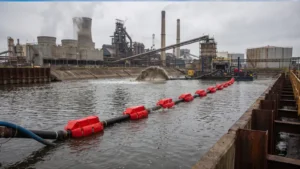
Floats for Wastewater Bypass and Temporary Pumping Systems
This guide explains how dredge pipe floats work, how to size and space them, how the main float types compare, and where clamp-on HDPE dredge pipe floats fit — so a floating dredge pipeline stays on the surface through the whole job.
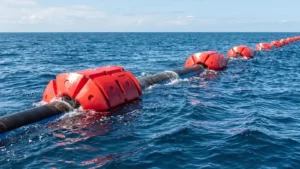
Floats for Marine Construction: Complete Buyer’s Guide
This guide explains how dredge pipe floats work, how to size and space them, how the main float types compare, and where clamp-on HDPE dredge pipe floats fit — so a floating dredge pipeline stays on the surface through the whole job.