
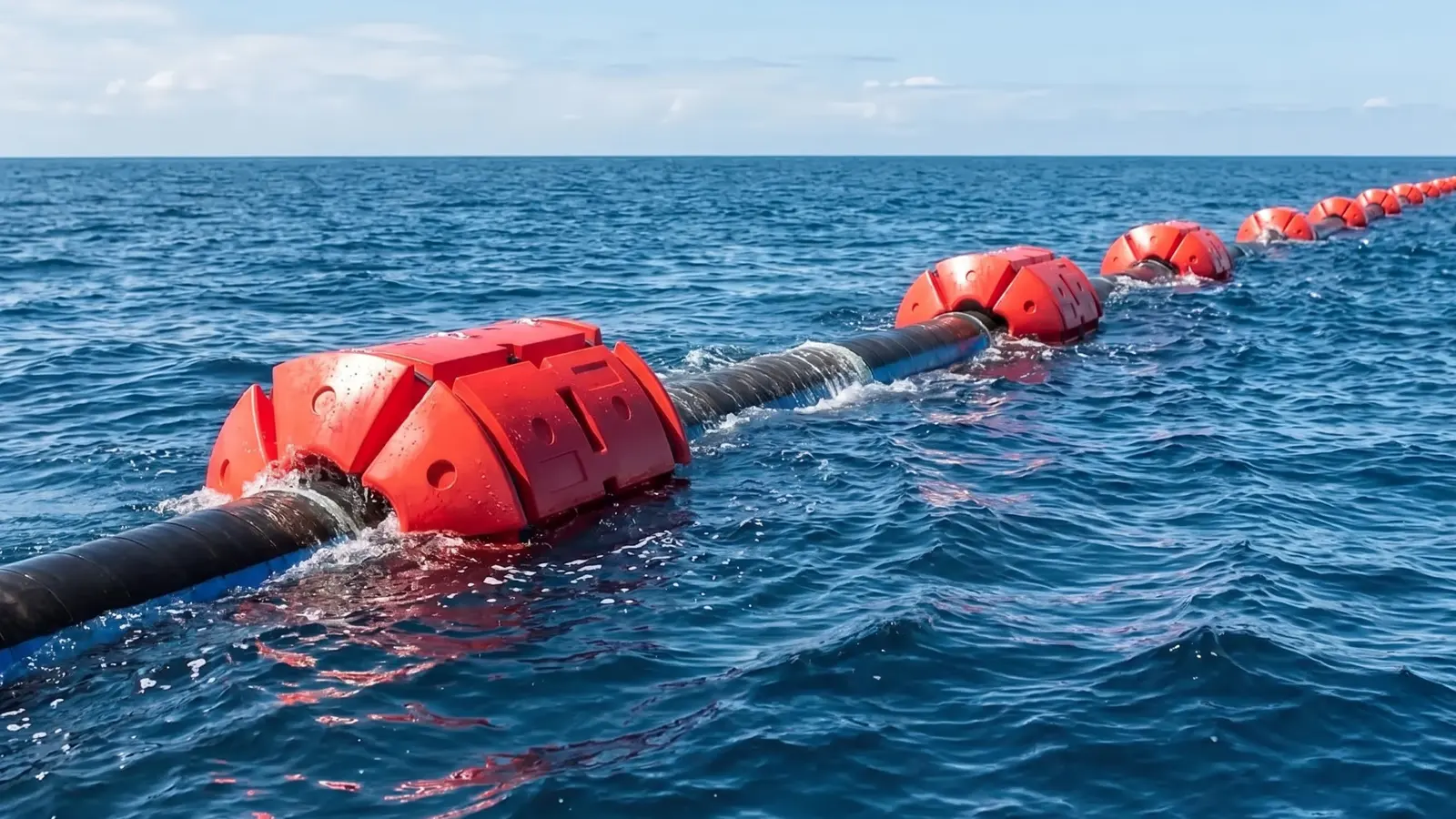
Marine construction floats can support concrete or grout hose, dewatering lines, temporary utilities, monitoring cable, and other approved services. The flotation plan is part of the temporary-works and marine-operations plan—not a substitute for mooring, anchoring, vessel control, navigation marking, hose or cable limits, permits, or the responsible engineer’s review.
- Quick Answer
- Common Marine Construction Applications for Floats
- Why Grout and Concrete Lines Need Careful Weight Planning
- Tidal and Current Considerations
- Coordination With Construction Sequencing
- Coordination With Permitting and Environmental Requirements
- Vessel and Barge Coordination
- Working Near Existing Underwater Infrastructure
- Coordinating Float-Supported Work With Other Marine Trades
- What to Send EZ Connect Floats for a Project Review
- Frequently Asked Questions
- Get a Project-Specific Float Configuration
Quick Answer
Size each line from its actual submerged operating and retained load, fittings, target freeboard, support limits, and site environment. Dense grout or concrete, tidal range, current, waves, barge movement, marine traffic, construction sequencing, existing utilities, and deployment or retrieval can all govern the layout.
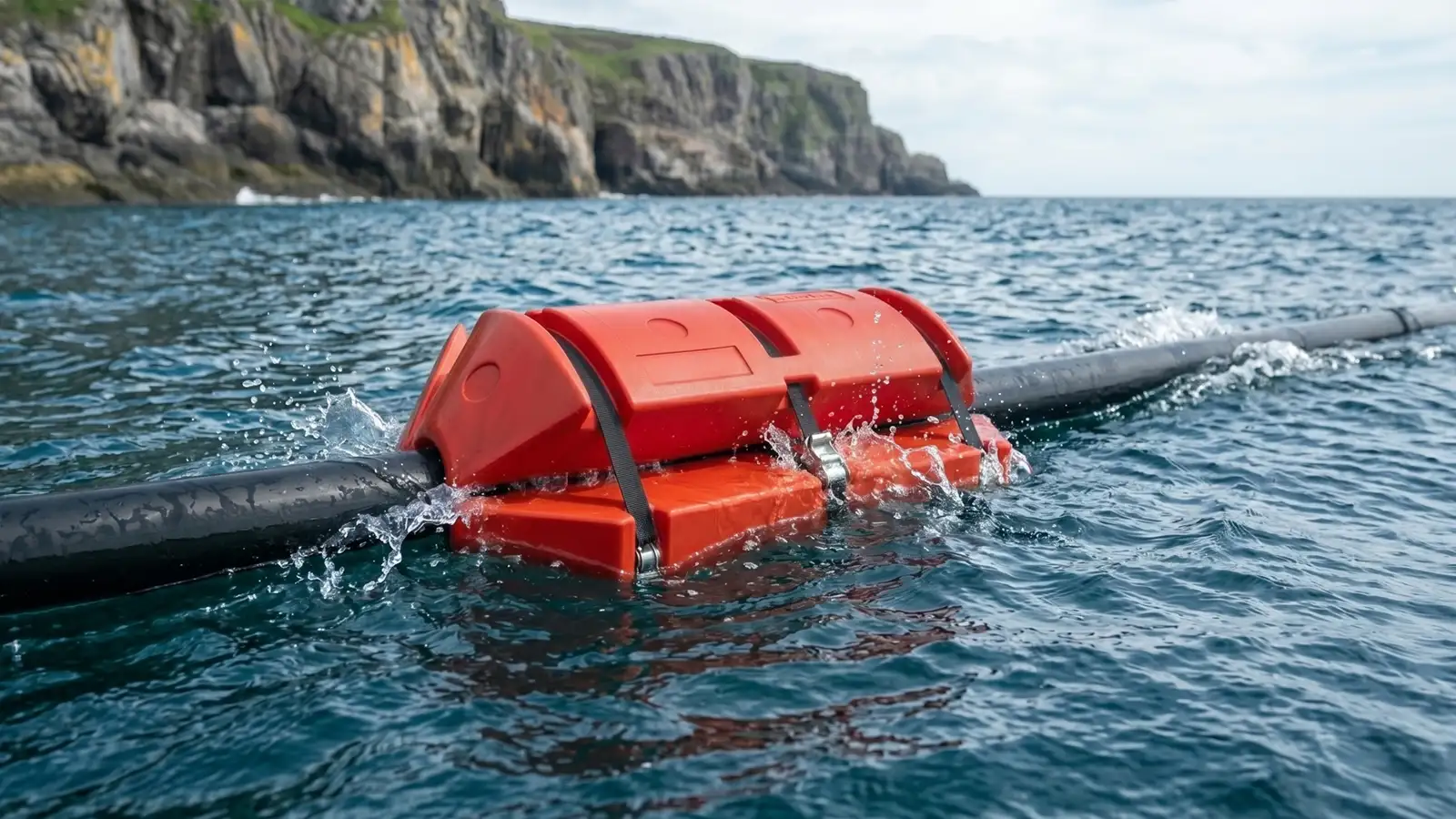
EZ Connect’s patented system uses individual polyethylene float units assembled around pipe, hose, cable, or umbilical with nylon straps and stainless-steel ratchets. Units can be added, removed, replaced, and reconfigured, but every new layout must be checked for fit, rated buoyancy, spacing, stability, hardware, line limits, and operating conditions.
Common Marine Construction Applications for Floats
- Concrete and grout line support—floating hose used to deliver concrete or grout to underwater placement points, where hose weight varies significantly between empty and actively pumping dense material
- Temporary water supply and dewatering lines—supporting pipe or hose used for construction dewatering or temporary water supply during marine construction phases
- Underwater instrumentation and monitoring cable support—floating cable connecting underwater sensors, cameras, or monitoring equipment used during construction to surface control and recording equipment
- Temporary utility crossings—supporting pipe or cable during temporary utility service across a water body while permanent underwater or overhead infrastructure is being installed
Why Grout and Concrete Lines Need Careful Weight Planning
Concrete and grout density varies by the approved mix design and can make a hose much heavier when full than when empty. Use actual mix data, hose construction, pressure, retained material, couplings, reducers, valves, and every required startup, pumping, shutdown, flushing, or blockage case. Verify minimum bend radius, allowable support and sidewall loads, pulsation, and the placement system’s operating procedure.
Tidal and Current Considerations
Tide changes water depth and the geometry between shore, barges, anchors, and placement points. Current, waves, wind, and wake create dynamic load and movement that static buoyancy alone does not control. Confirm slack, tension, bend radius, route excursion, mooring or anchoring, vessel movement, freeboard, and retrieval through the full approved operating window.
Coordination With Construction Sequencing
Marine construction projects frequently need float-supported lines only during specific construction phases, with requirements changing as work progresses—a project might need concrete placement hose support during a foundation pour phase, then different cable support requirements during instrumentation installation, then temporary utility support during a different phase entirely. Planning float inventory and configuration against the actual construction sequence, rather than a single static requirement for the whole project, avoids both under-provisioning during peak-demand phases and unnecessary equipment costs during phases with lighter float requirements.
Coordination With Permitting and Environmental Requirements
Marine construction work frequently operates under environmental permits with turbidity, disturbance, or timing restrictions similar to those covered in wetland and marsh construction equipment guides—float-supported line planning should account for any permit conditions affecting how and when work can proceed in the water, since these conditions can affect construction sequencing and therefore float requirements at different project phases.
Vessel and Barge Coordination
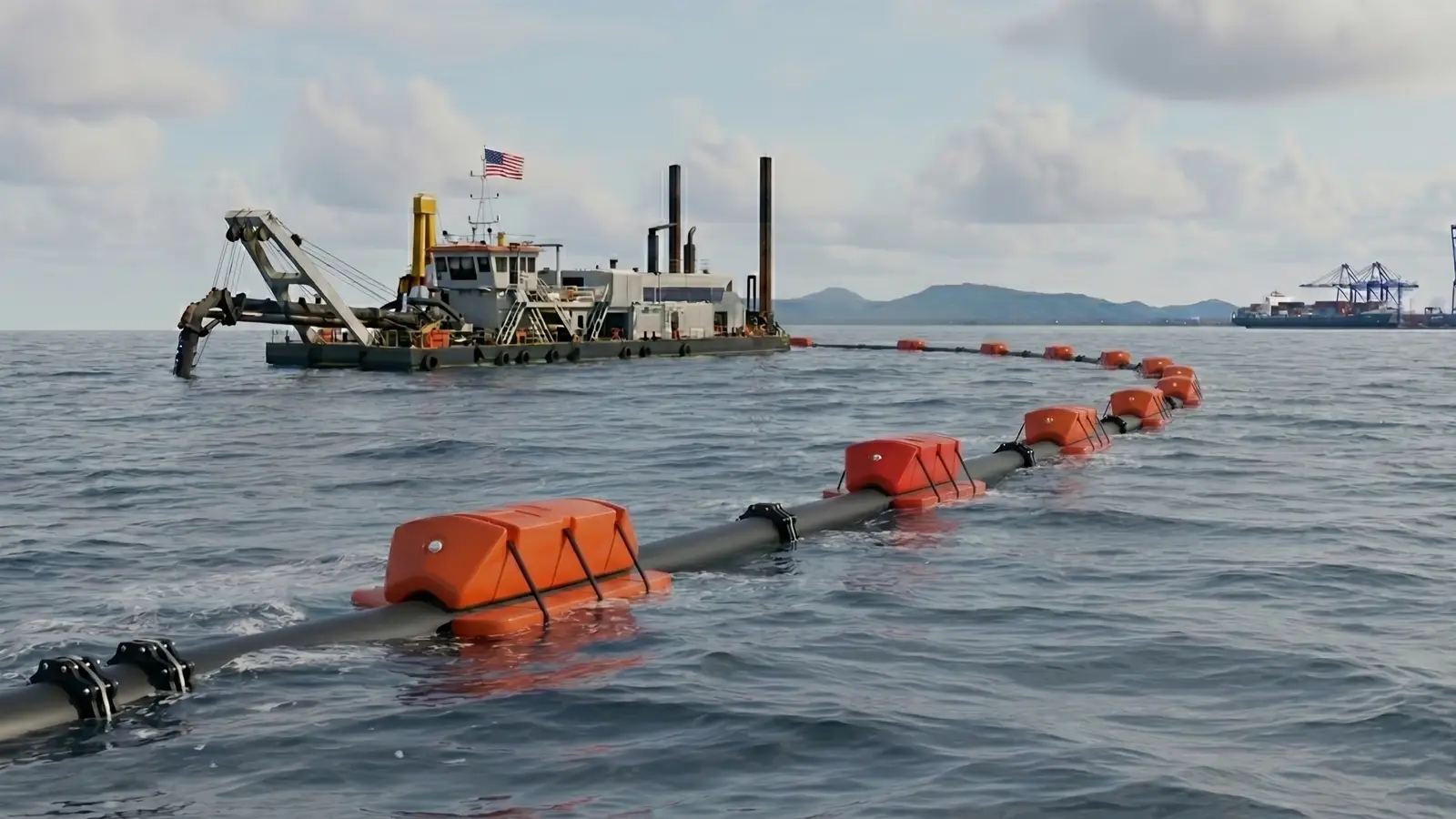
Coordinate the line with the marine-operations and temporary-works plan. Barge repositioning, crane swing, propellers, anchors, spuds, towing, fenders, access lanes, diver zones, and emergency maneuvers can all conflict with a floating route. Floats provide support; mooring, anchoring, tension, marking, traffic control, and vessel procedures control position and exposure.
Working Near Existing Underwater Infrastructure
Marine construction sites frequently include existing underwater infrastructure—utility crossings, other construction elements, navigational features—that float-supported lines need to route around without creating entanglement or interference risk. Route planning for float-supported lines should account for known underwater infrastructure the same way it accounts for tidal and current conditions, confirming clearances are adequate not just at calm-water conditions but across the range of positions the line might occupy as water conditions change through a tidal cycle.
Coordinating Float-Supported Work With Other Marine Trades
Marine construction projects typically involve multiple trades and equipment operating in close proximity—divers, crane barges, other float-supported lines from different subcontractors—and float-supported line routing should be coordinated with the broader project’s overall marine traffic and work-zone plan, not planned in isolation. A float-supported line routed without awareness of a diver work zone or another contractor’s equipment swing radius creates real safety and schedule risk beyond the buoyancy engineering question this guide otherwise focuses on.
What to Send EZ Connect Floats for a Project Review
- Construction activity and phase: concrete or grout placement, dewatering, temporary water, utility crossing, monitoring, or another approved use
- Pipe, hose, cable, or umbilical data; outside diameter, construction, length, dry and submerged weight, contents, pressure, bend and support limits
- Approved mix or fluid density, retained/flooded cases, fittings, couplings, valves, terminations, and concentrated loads
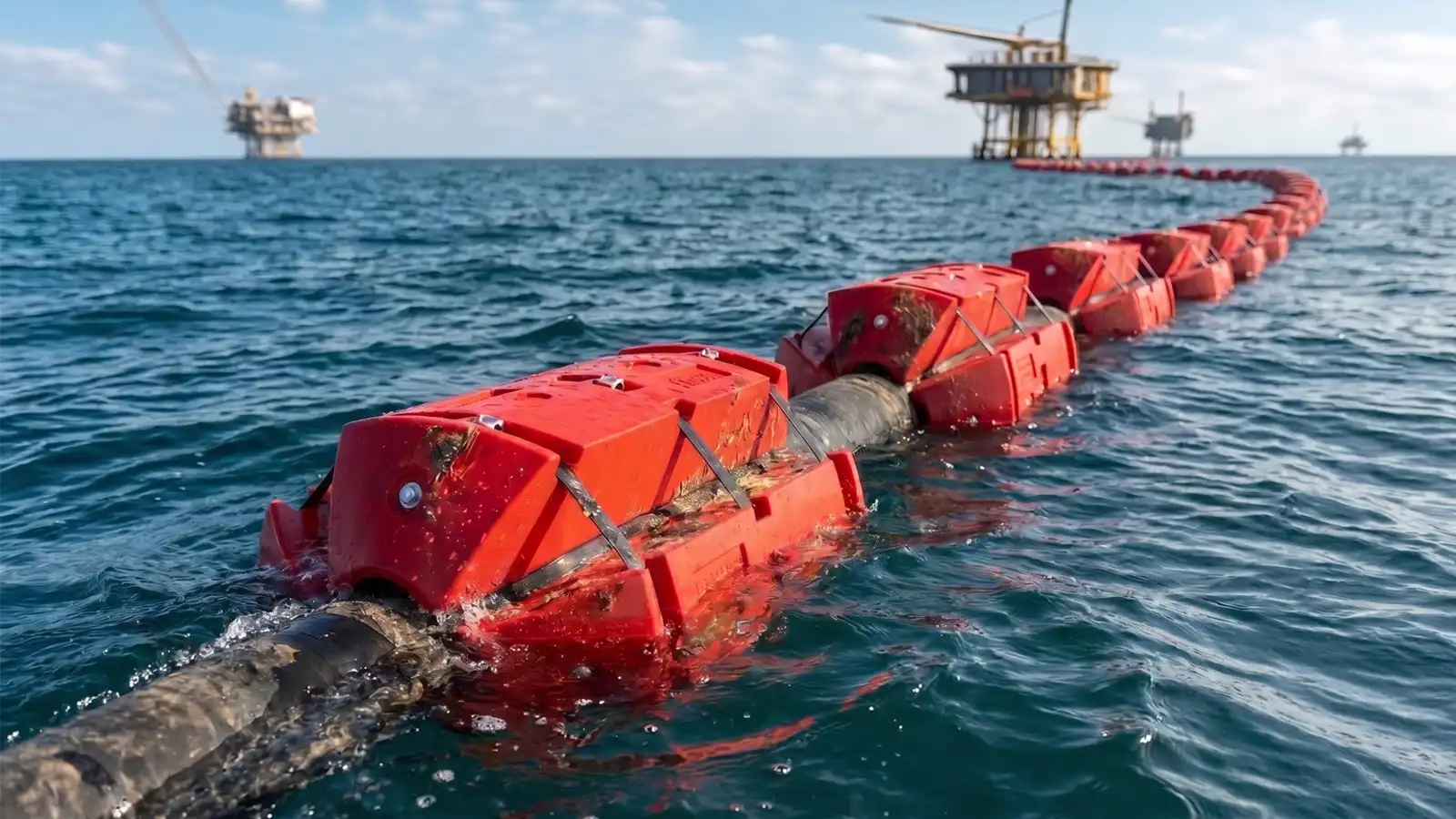
- Route and temporary-works drawings; barge or vessel interface; mooring/anchoring/tension system; tide, current, waves, wake, wind, water density, and weather window
- Navigation, marking/lighting, environmental permits, diver and crane zones, existing utilities, inspection, retrieval, phase schedule, spares, quantity, and delivery location
Frequently Asked Questions
Why do concrete and grout hoses need project-specific sizing?
The actual mix density, hose, pressure, retained material, couplings, bend limits, and placement procedure determine the load; a generic concrete specific gravity is not a design basis.
Do floats keep a marine construction line in position?
They provide buoyancy. The complete route, mooring or anchoring, tension, vessel interface, tide, current, waves, and operating controls determine position.
Should float requirements be planned by construction phase?
Yes. Different phases may use different lines, loads, routes, vessels, permits, and quantities. Reconfiguration still requires a documented sizing and inspection review.
What should be checked around existing underwater infrastructure?
Confirm surveyed location, clearance through tide and route excursion, anchors, propellers, crane and diver zones, line failure consequences, permits, and emergency recovery.
Can one EZ Connect inventory support hose, pipe, and cable work?
Potentially. The modular units can be reconfigured, but each line requires an approved set size, spacing, straps, load case, support-limit, and environment review.
Get a Project-Specific Float Configuration
Send EZ Connect Floats the supported line, dimensions, operating and retained loads, concentrated components, required freeboard, environment, line limits, route, quantity, and schedule. The team can review the modular set, spacing approach, straps and hardware, spare units, and quote for the actual application.
Request a Quote or call (858) 859-2385 to discuss the project.
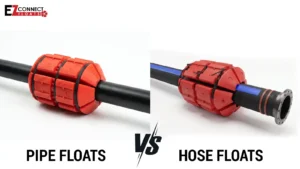
Pipe Float vs. Hose Float: What’s the Real Difference?
This guide explains how dredge pipe floats work, how to size and space them, how the main float types compare, and where clamp-on HDPE dredge pipe floats fit — so a floating dredge pipeline stays on the surface through the whole job.
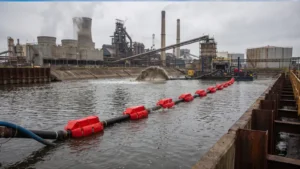
Floats for Wastewater Bypass and Temporary Pumping Systems
This guide explains how dredge pipe floats work, how to size and space them, how the main float types compare, and where clamp-on HDPE dredge pipe floats fit — so a floating dredge pipeline stays on the surface through the whole job.
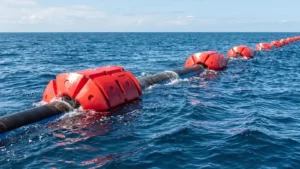
Floats for Marine Construction: Complete Buyer’s Guide
This guide explains how dredge pipe floats work, how to size and space them, how the main float types compare, and where clamp-on HDPE dredge pipe floats fit — so a floating dredge pipeline stays on the surface through the whole job.