
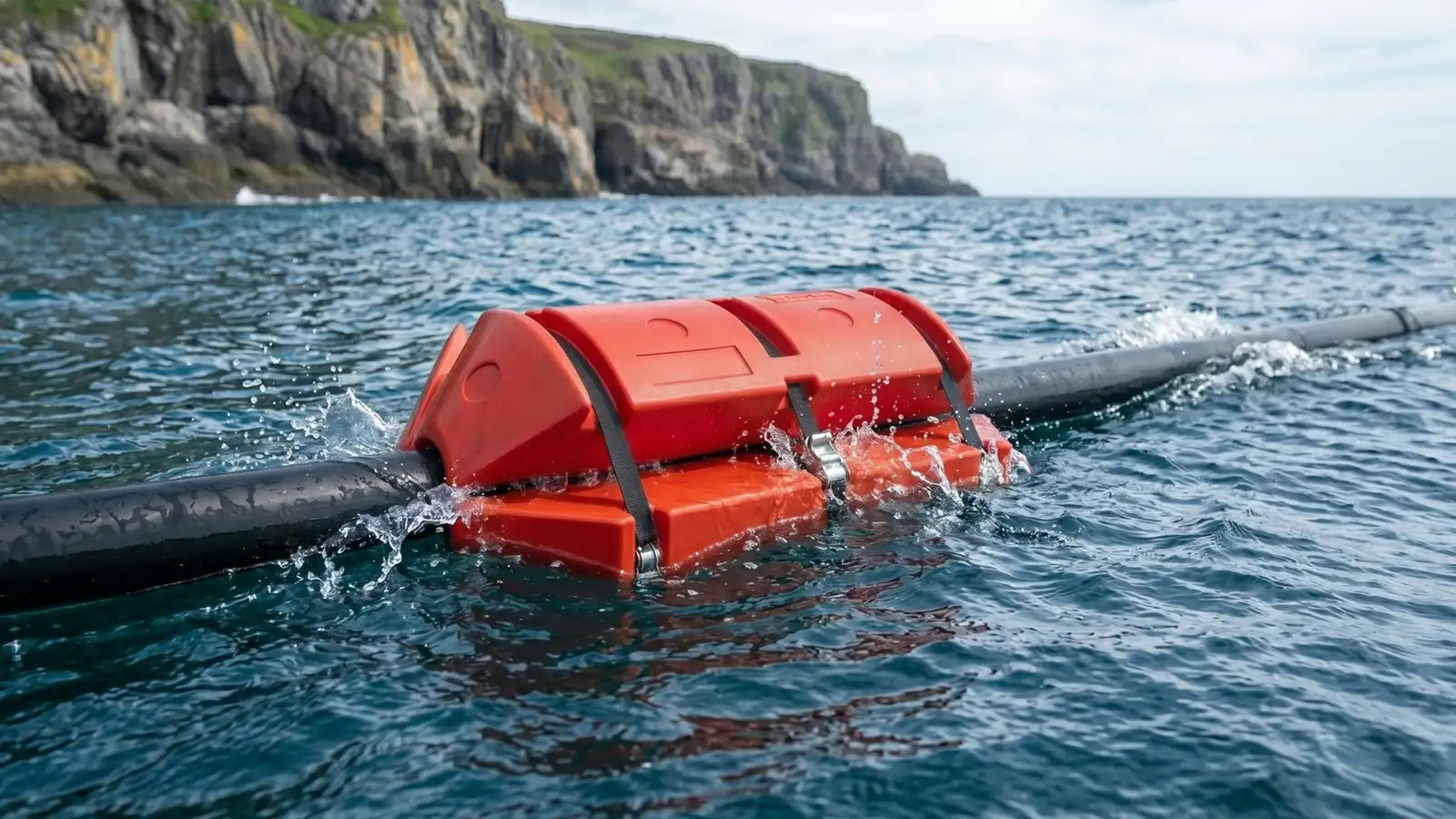
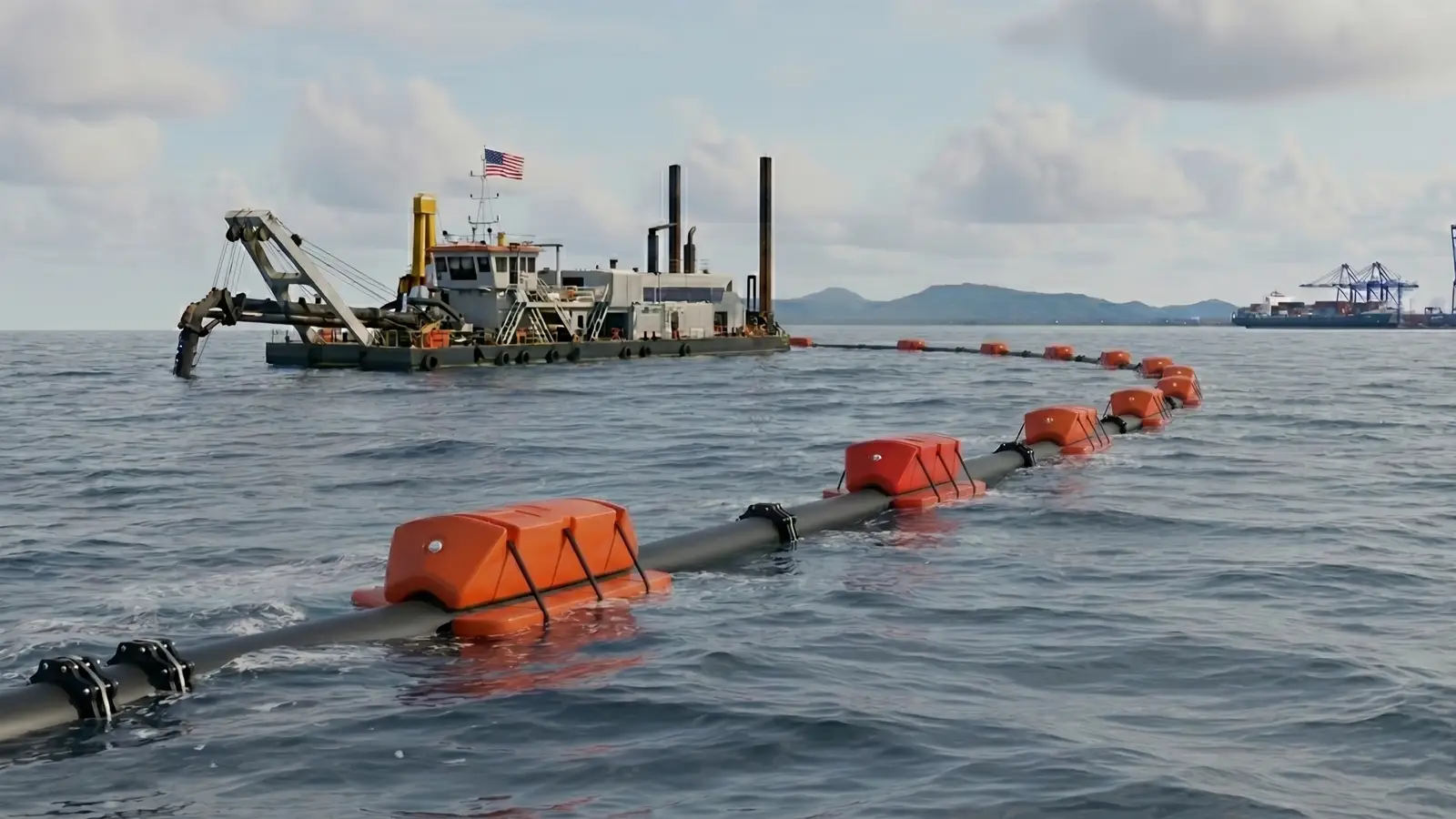
Dredge pipe floats are buoyant HDPE collars that clamp onto a dredge discharge or slurry pipeline and keep it floating on the water’s surface. A pipeline full of dredged slurry is far heavier than water and will sink, kink and drag on the bottom without added buoyancy — dredge pipeline floats supply that lift and hold the line in a straight, workable position. Choosing them comes down to your pipe’s outside diameter, the filled weight of the line, the water conditions, and how many floats you space along each length.
This guide explains how dredge pipe floats work, how to size and space them, how the main float types compare, and where clamp-on HDPE dredge pipe floats fit — so a floating dredge pipeline stays on the surface through the whole job.
Why a Dredge Pipeline Sinks — and What That Costs You
An empty HDPE pipe floats on its own. Fill that same pipe with dredged slurry — a mix of sand, silt and water at a specific gravity well above 1.0 — and the loaded line becomes heavier than the water around it and wants to sink. That is the core problem every floating dredge pipeline has to solve: the pipe is buoyant empty but negative when it is doing its job.
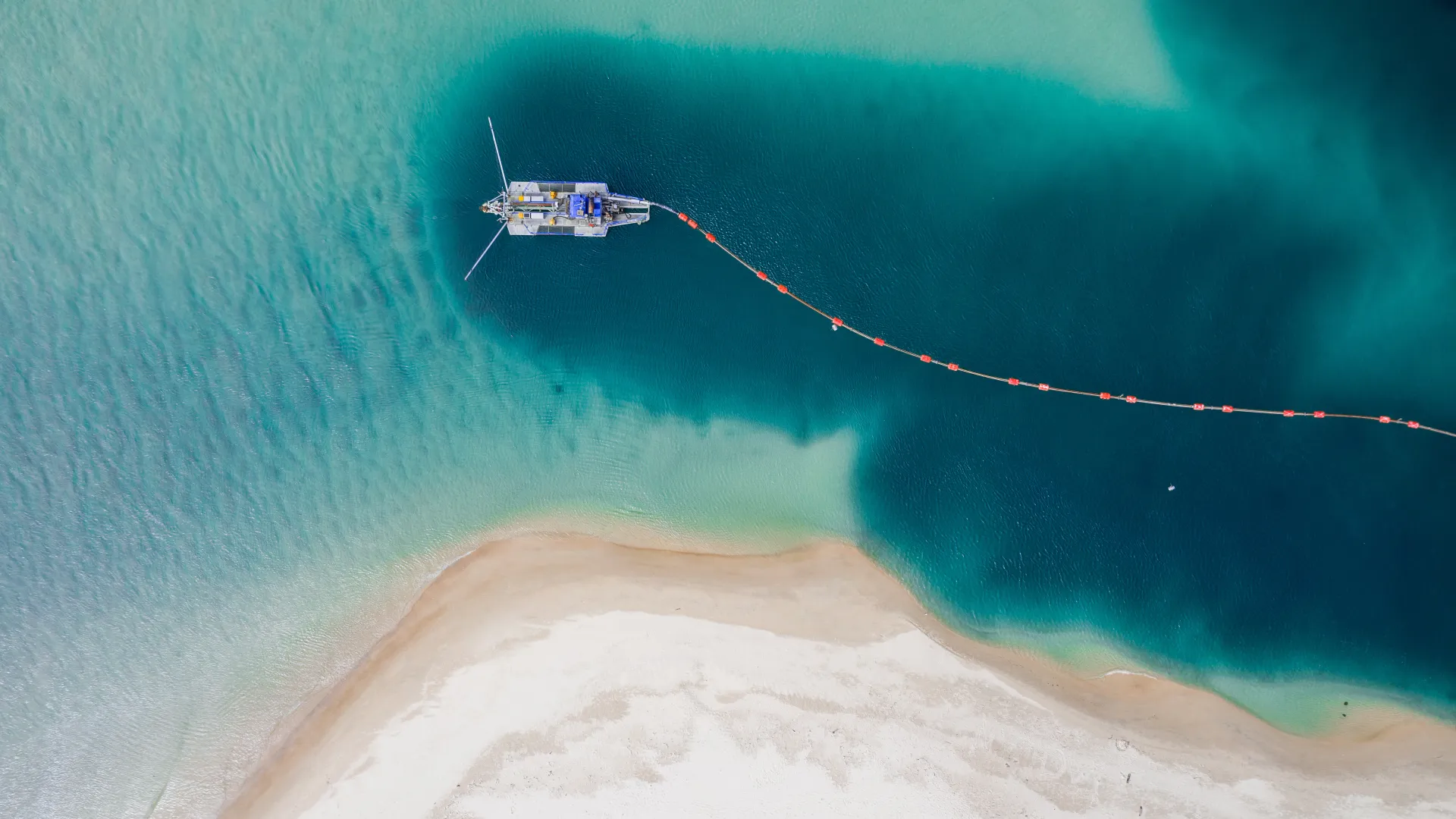
Let the line drop and the failures stack up fast. The pipe sags between supports, kinks at the joints, and chafes along the bottom, which restricts slurry flow, invites blockages and forces downtime to clear them. Sinking sections strain couplings and load the dredge pump. On open water, currents, wake and tide push an under-supported line off station and pull it out of line. The job of dredge pipe floats is to carry the submerged weight of the filled pipeline with margin to spare, and to keep the floats spaced tight enough that the line rides straight instead of sagging float-to-float.
How Dredge Pipe Floats Work
Buoyancy is displacement. A float holds back a volume of water, and the weight of that displaced water is the lift it provides. Dredge pipe floats add sealed, air-tight HDPE volume clamped around the pipeline, so each float lifts a share of the filled line’s weight. Add enough floats, spaced correctly, and the whole dredge pipeline on water carries at the surface with the freeboard you want.
Clamp-On, Two-Half HDPE Design
A modular dredge pipe float is molded in two halves that wrap around the pipe and lock closed with a stainless steel ratchet strap. One float profile fits a wide range of pipe sizes, and you add or remove floats along the line to tune buoyancy — no welding, no permanent fittings, and the same floats move to the next pipe size or the next job.
Sealed HDPE Instead of Foam Fill
Marine-grade HDPE resists UV, saltwater and the abrasives in slurry, and because a sealed float has no foam core it cannot waterlog. A foam-filled float that gets scuffed or cracked slowly takes on water and loses lift; a sealed HDPE dredge pipe float keeps its buoyancy even with a scarred shell, which matters on a line that is dragged, bumped and re-deployed for years.
Buoyancy, Spacing and Freeboard
Two numbers drive the design: the buoyancy each float provides, and the submerged weight of the filled pipe per foot. Divide the load across floats and you get how many floats per pipe length you need; tighten the spacing and the line sags less between floats. Adding floats beyond the minimum raises freeboard — how high the pipe rides — which is your safety margin against slurry density spikes, current and wave action.
How to Size and Select Dredge Pipe Floats
Before you order a set, work through the pipe, the slurry and the site. These are the inputs that actually decide float size, quantity and spacing:
- Pipe outside diameter — size floats to the actual OD, not the nominal pipe size, so the clamp seats correctly.
- Filled weight and slurry specific gravity — the submerged weight of the loaded line per foot sets the buoyancy you need. Denser slurry needs more lift.
- Line length and span to float — how much of the discharge or slurry line has to stay on the surface, including any hose sections.
- Buoyancy margin and freeboard — how high you want the pipe to ride. More margin means fewer problems when conditions change.
- Water conditions — current, wake, tide and fresh versus salt water. Rougher water calls for tighter spacing and a secure, anti-slip clamp.
- Float spacing — how many floats per pipe length — close enough to stop sag, spread evenly along the run.
- Clamp and anti-slip hold — the strap has to keep each float on station against current and drag without crushing the pipe.
- Reuse and total cost of ownership — sealed floats that move between pipe sizes and jobs, and that never waterlog, cost less over their life than cheaper foam-filled floats.
Dredge Pipeline Float Options Compared
There is more than one way to float a dredge line. Match the approach to how long the line will be in service and how much you need to re-tune it.
|
Option |
Best-Fit Use |
Advantages |
Limitations |
|---|---|---|---|
|
Modular clamp-on HDPE floats |
Most dredge discharge and slurry lines; jobs where pipe size and buoyancy change |
Add or remove per length; no foam to waterlog; reuse across sizes and jobs; fast install |
Needs correct floats-per-length; upfront cost of the float set |
|
Foam-filled floats |
Legacy setups already running foam floats |
Provide buoyancy; familiar |
Waterlog and lose lift if the shell is breached; heavier; harder to service and dispose of |
|
Improvised pontoons or drums |
Very short, one-off temporary runs |
Cheap; often already on site |
Unstable; poor spacing control; chafe and detach; not engineered for slurry loads |
|
Self-floating (thick-wall) HDPE pipe |
Permanent floating pipelines specified from the start |
No separate floats to install or store |
Only floats reliably when empty or partly full; costlier pipe; inflexible; slurry-full runs still need margin |
Where Dredge Pipe Floats Fit Best
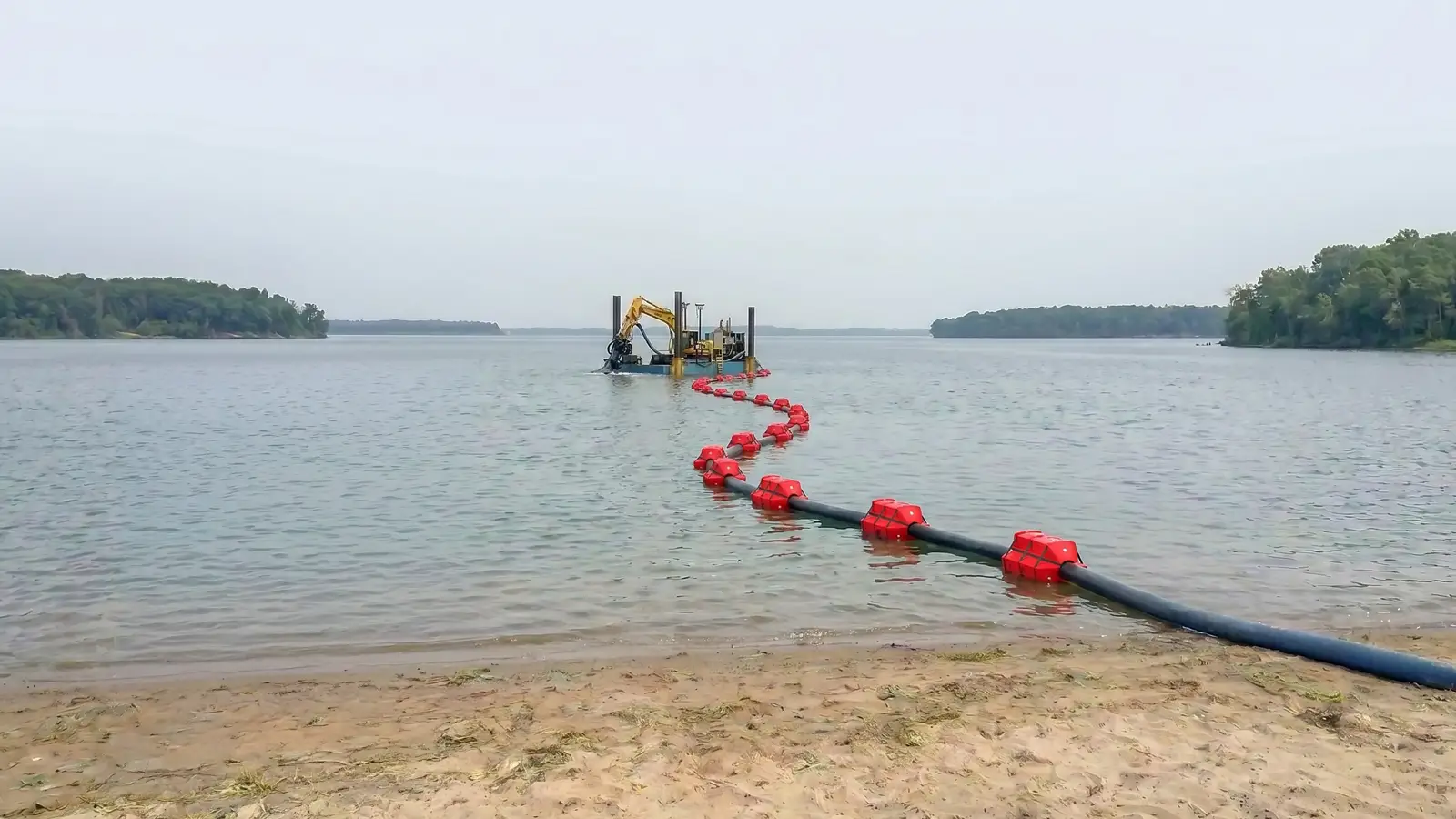
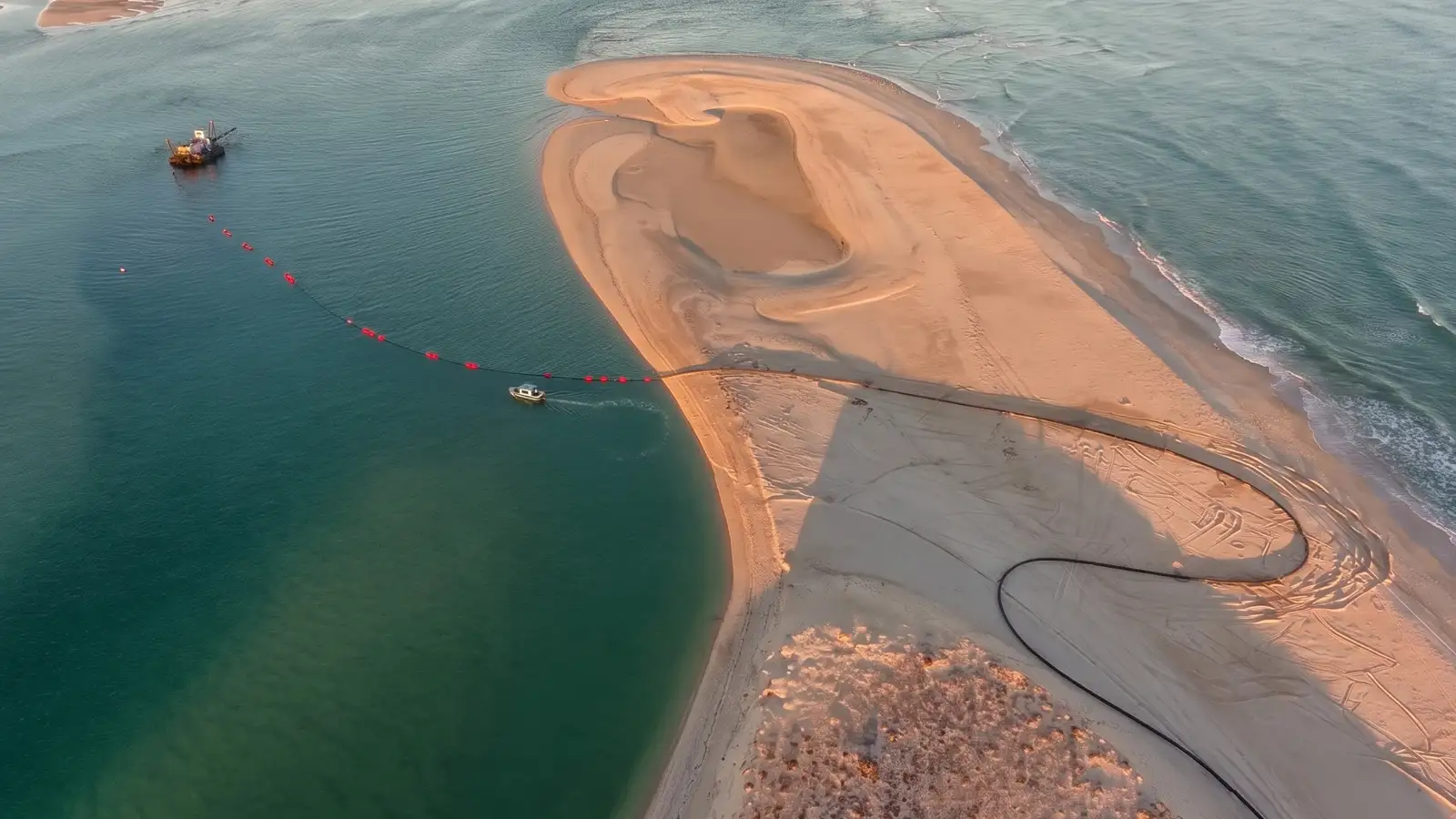
Clamp-on HDPE dredge pipe floats are the right choice on lines that move, get re-deployed and change with the job. They suit dredge discharge and slurry pipelines, mining tailings and process lines, marine construction and temporary floating pipelines, and sediment management projects where the line is set up, moved and taken down repeatedly. The same floats also carry suction and discharge hose as dredge hose floats.
A different approach can make sense at the extremes. A permanent floating pipeline that never changes may justify self-floating thick-wall pipe specified up front, and a very short temporary run might get by on improvised buoyancy. For almost everything in between — where you need to size buoyancy to the filled line, keep it on the surface, and reuse the floats — clamp-on dredge pipeline floats are the practical answer.
EZ Connect Dredge Pipe Floats
EZ Connect dredge pipe floats are the clamp-on, modular HDPE type described throughout this guide. One float profile fits pipe from 1 inch to 32 inches, each float provides 67 lbs (30.4 kg) of buoyancy at 50% submergence, and there is no foam fill to waterlog. The two halves close around the line with a stainless steel ratchet strap, so you add or remove floats along the run to hit the buoyancy and freeboard your filled pipeline needs, then move the same floats to the next size or the next site.
Sized to your pipe’s outside diameter and the filled weight of the line, the floats are built from marine-grade HDPE for dredging, mining, marine construction and sediment management, and the same design carries suction or discharge hose as dredge hose floats. Send us your pipe size, line length and water conditions and our team will work out floats-per-set, spacing and total buoyancy — whether you need a full floating dredge pipeline set or replacement dredge pipe floats for sale.
Dredge Pipe Float FAQs
What are dredge pipe floats?
Dredge pipe floats are buoyant HDPE collars that clamp onto a dredge discharge or slurry pipeline to keep it on the water’s surface. They add sealed displacement so a slurry-filled line that would otherwise sink stays afloat and straight.
How do dredge pipe floats work?
Each float displaces a volume of water, and the weight of that water is the lift it provides. Clamped along the pipeline, the floats together carry the submerged weight of the filled line, holding it at the surface with freeboard to spare.
How many floats do I need per pipe length?
It depends on the buoyancy per float and the submerged weight of the filled pipe per foot. You divide the load across floats to get the count, then tighten spacing so the line does not sag between them. Share your pipe size, filled weight and line length and a supplier can calculate floats-per-set for you.
Won’t the HDPE pipe just float on its own?
Empty, yes — HDPE pipe floats. Full of dredged slurry it becomes heavier than water and sinks, which is exactly why a working dredge pipeline needs added buoyancy from floats.
What size dredge pipe float do I need?
Match the float to the pipe’s outside diameter, not the nominal size. A 12 inch dredge pipe float, for example, is sized to the OD of 12 inch pipe so the clamp seats correctly and holds position. The number of floats then comes from the filled weight of the line.
How much buoyancy does each dredge pipe float provide?
An EZ Connect float provides 67 lbs (30.4 kg) of buoyancy at 50% submergence. Total buoyancy is the number of floats multiplied by that figure, which is how a set is scaled to the line.
Are dredge pipe floats sold individually or in sets?
Both. You can buy a full set sized for a floating dredge pipeline or order replacement dredge pipe floats for sale as individual units, since one modular float works across pipe sizes.
Floats for Mining Slurry Transport: Application Guide
This guide explains how dredge pipe floats work, how to size and space them, how the main float types compare, and where clamp-on HDPE dredge pipe floats fit — so a floating dredge pipeline stays on the surface through the whole job.
Pipe Float vs. Hose Float: What’s the Real Difference?
This guide explains how dredge pipe floats work, how to size and space them, how the main float types compare, and where clamp-on HDPE dredge pipe floats fit — so a floating dredge pipeline stays on the surface through the whole job.
Floats for Wastewater Bypass and Temporary Pumping Systems
This guide explains how dredge pipe floats work, how to size and space them, how the main float types compare, and where clamp-on HDPE dredge pipe floats fit — so a floating dredge pipeline stays on the surface through the whole job.